Keiko Fujimori Takes Office: A Victory for the Narrow Margins and Big Promises
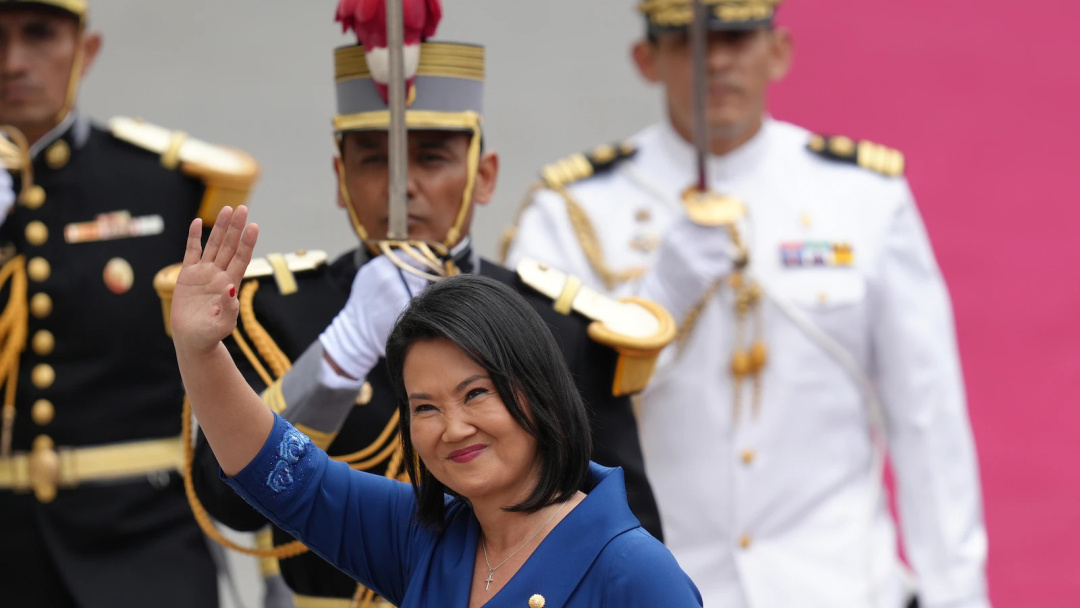
In a spectacular display of political acrobatics, Keiko Fujimori has been sworn in as the ninth president of Peru in just over a decade, triumphing by a margin so narrow it could slip under a bathroom stall door. With fewer than 50,000 votes separating her from the abyss of political obscurity, Fujimori now assumes the role of the nation’s leader, armed with promises that sound more like a script from an action movie than a political platform.
Fujimori, a veteran of presidential campaigns and the daughter of a former president who enjoyed a tenure marked by both economic stabilization and human rights violations, is clearly taking a page out of her father’s book. Her campaign was a cocktail of promises to combat crime with an “iron fist” and plans to build a megaprison that would make even the most hardened criminals shudder. In a world where political pledges often float away like balloons at a birthday party, Fujimori’s iron-fisted approach has at least the advantage of a catchy tagline.
Still Beats Watergate:
Sponsor success. Continue reading:
In her inaugural address, Fujimori vowed to tackle the pressing issues of crime and malnutrition while simultaneously preparing the country for El Niño, a task that usually requires a team of meteorologists, a crystal ball, and maybe a touch of luck. Her strategy to ensure judges’ safety by allowing them to hide their identities during trials sounds like a plot twist straight out of a legal thriller, proving that the best way to enforce the law is apparently from behind a disguise.
As if that weren’t enough, the new president has promised to rework social services like a budget-conscious interior designer rearranging the furniture for maximum effect. A 15% increase in the minimum wage is certainly a crowd-pleaser, but will it be enough to placate the growing discontent among the populace, particularly those who might prefer a little less political theater?
Protests erupted almost instantaneously, with opposition lawmakers brandishing photographs of civilians killed during anti-government protests. It seems that not everyone is ready to roll out the red carpet for Fujimori, who might find that governing is not just about winning an election but also about holding onto the reins when the horses get skittish.
Fujimori’s victory is emblematic of a broader trend in South America, where conservatives are making a comeback like a bad sequel that nobody asked for. The region has seen a shift toward right-wing leadership amid rising concerns over crime and economic stagnation, all while the ghost of left-wing populism fades into the background like a forgotten sitcom.
As she takes office, the future remains uncertain for Fujimori, who will have to navigate a politically charged environment where every promise is scrutinized and every misstep magnified. For now, she is basking in the glow of victory, but with opposition leaders demanding accountability and the specter of protests looming large, one can only wonder how long that glow will last before it flickers out under the harsh light of reality.
In Peru, the only certainty is that the political drama will continue, and as the curtains rise on this new administration, the audience is already on the edge of their seats, popcorn in hand, waiting for the next act in this riveting political theater.