Trump's Executive Order: Warning Signs at the Smithsonian to Counteract Truth
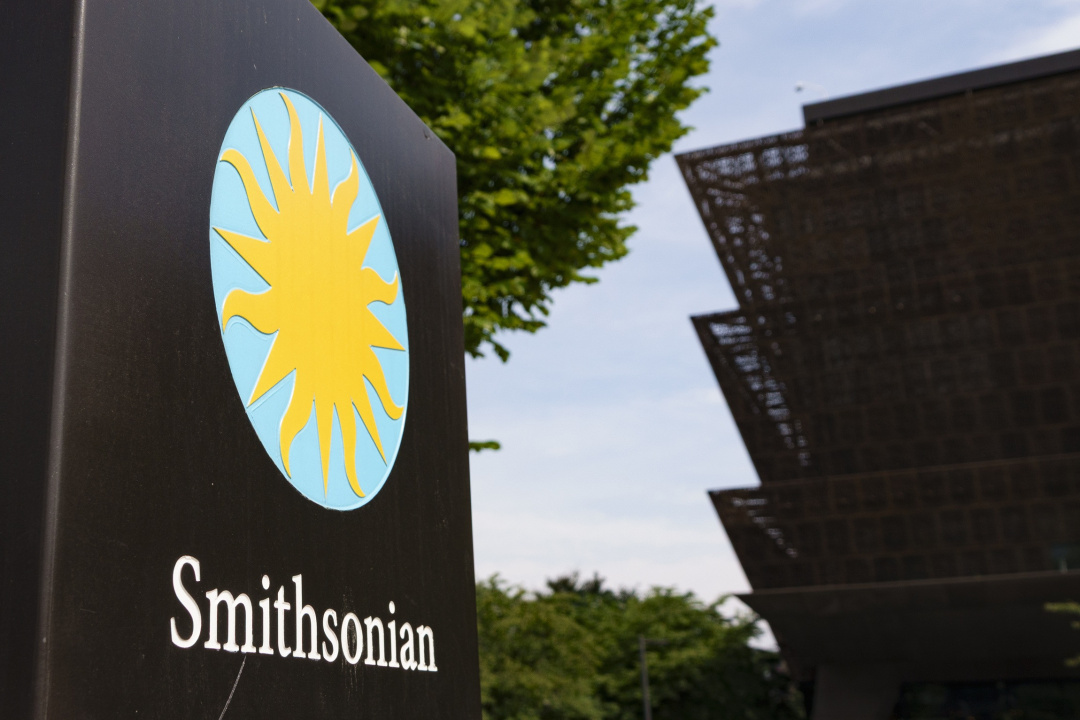
In a stunning display of presidential prowess, the White House has unveiled its latest initiative to combat what it claims is an ideological plague infecting the Smithsonian Institution. President Trump, in an executive order seemingly crafted with the same finesse as a toddler's crayon drawing, has mandated the installation of warning signs outside the National Museum of American History. These signs will alert unsuspecting visitors to the supposed danger of encountering a radical interpretation of American history—because what could be more frightening than a nuanced understanding of the past?
The signs, which will be strategically placed along the sidewalks, will serve as a gentle nudge for visitors to brace themselves against the onslaught of historical facts that the administration has deemed unpatriotic. According to the new White House guidelines, these exhibits allegedly transform American history into a “prime tool” for advancing social justice—a concept that apparently terrifies those in charge of the country’s narrative. It’s almost as if the administration believes that simply presenting facts is a direct assault on American values.
Still Beats Watergate:
Sponsor success. Continue reading:
This latest move is not without precedent; the administration has been pressuring the Smithsonian for over a year, demanding a revision of its content to align with the White House’s vision of history. According to insiders, at least one museum director has already been shown the door for not adhering to the strict guidelines of patriotic storytelling. Who knew that history could be so politically charged?
Critics of the executive order have emerged from the woodwork, highlighting the absurdity of a president who has been known to stretch the truth more than a rubber band at a toddler’s birthday party. NMAH director Anthea Hartig has publicly defended the museum’s commitment to scholarship, accuracy, and independence. In a stunning act of defiance, she stated, “We preserve evidence of American life in all its breadth,” which must have sent shivers down the spines of those in the Oval Office.
Representative Melanie Stansbury, who has been watching the saga unfold like a concerned mother at a family reunion, has condemned the order as a political overreach. She pointed out that the Smithsonian is a public institution, not a personal playground for the President to rewrite history. Meanwhile, Sarah Weicksel, executive director of the American Historical Association, lamented the lack of precedent for a president demanding a sanitized narrative from a museum.
As the signs begin to be installed, one has to wonder what other institutions might fall under the administration's gaze. Will the National Archives be ordered to redact portions of the Constitution? Perhaps the Library of Congress will be mandated to replace books that don’t fit the current narrative.
The irony of this entire situation is not lost on the public, as the administration itself is often accused of advancing its own version of reality. As the battle between truth and political expedience continues, one thing is clear: the only thing more dangerous than a radical interpretation of history is a radical interpretation of freedom itself. The Smithsonian may be the latest target in this ongoing cultural war, but it certainly won’t be the last.
So, as you stroll past the newly installed warning signs next time you visit the National Museum of American History, remember that they are there to protect you from the radical truth—a truth that is, ironically, a shared inheritance of all Americans. After all, who needs facts when you have a well-crafted narrative?