Unmanned Amphibious Assaults: Just Send the Drones, Not the Troops
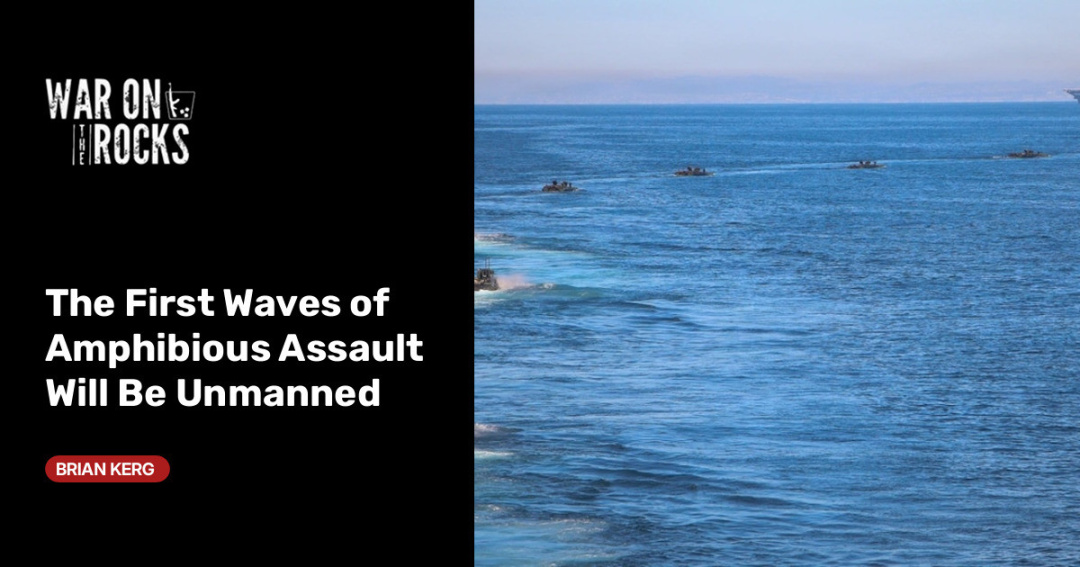
In a stunning turn of events, military strategists are now proposing that the future of amphibious assaults might be best handled by unmanned vehicles, thereby allowing for a new wave of warfare that eliminates the need to risk human lives. This innovative approach suggests that instead of brave soldiers storming the beaches, we might just send in a fleet of drones and robots to do the heavy lifting. After all, why send our finest into the fray when we can deploy remote-controlled machines that don’t require coffee breaks or bathroom stops?
Picture this: instead of marines splashing onto the shore, a fleet of unmanned amphibious boats rolls in, drops their ramps, and out rolls a series of robotic ground vehicles equipped with remote-controlled machine guns. It’s like a military version of a video game — all the fun of warfare without the pesky issues of morale and political accountability.
Still Beats Watergate:
Sponsor success. Continue reading:
The operational advantages are staggering. For one, if an unmanned vehicle gets blown up, no one has to write a heartfelt letter to a grieving family back home. Instead, the military can just order a new drone, which is likely cheaper and faster to produce than the average amphibious ship designed for human occupants. This means leaders can now undertake risky operations without the burden of explaining to the public why thousands of young soldiers are suddenly MIA.
Of course, this brilliant plan raises some questions. Will the robots be sent in as the first wave, or will they be sitting in the back, waiting for the chaos to unfold? And what happens when a fleet of unmanned boats gets caught in a storm? Do we have a backup plan for that? Perhaps we could throw in a few human operators as a contingency to ensure someone’s at the helm when the chips are down.
Critics might argue that this reliance on technology erodes the human element of warfare, but let’s be real — war is already a brutal business, and why not let machines take the heat? Plus, there’s the added benefit of not having to deal with those awkward press briefings after a human casualty. Instead of answering tough questions about loss, military officials can just shrug and say, “Well, we lost a few drones, but we’re working on replacements!”
As exciting as this sounds, the real question remains: will the public accept a future where our military strategy is dictated by the whims of technology? Will we be cheering on our robotic warriors as they roll into battle, or will we long for the days when a human touch was still part of the equation? For now, the military seems content to let technology take the lead — after all, it’s much easier to replace a drone than to replace a human being.
So, get ready for the future of warfare, where the first waves of amphibious assaults will be unmanned, and the only thing at risk will be the pride of the military generals who may or may not be controlling the chaos from the comfort of a climate-controlled command center. It’s a new era, folks, and it seems like the robots are taking over — not just our jobs, but our battles too. Just remember to keep your eyes on the skies and your fingers crossed that the machines don’t malfunction mid-assault!