Tinubu's Campaign Contributions: A Generous Gesture or a Political Investment?
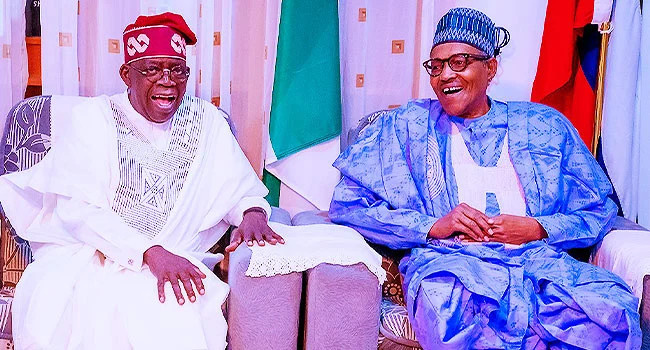
In a shocking revelation that sent ripples through the corridors of political power, former Secretary to the Government of the Federation, Babachir Lawal, has uncovered the truth about Bola Tinubu's financial involvement in the All Progressives Congress's formation. Apparently, Tinubu didn't just play a role; he was a veritable ATM for the APC’s 2015 presidential campaign. This raises a critical question: Is funding political campaigns an act of benevolence, or is it more akin to a high-stakes investment in a political portfolio?
Lawal's bombshell claims have sparked a flurry of discussion about the ethics of campaign financing in Nigeria. As it turns out, when wealthy individuals pour money into political machinery, they might be expecting a little something in return—like, say, the ability to influence policy decisions or a front-row seat at the political theater. After all, nothing says "public service" quite like a hefty contribution to the campaign fund of a candidate who promises to deliver on every wish list.
Still Beats Watergate:
Sponsor success. Continue reading:
The narrative pushed by Lawal suggests that Tinubu’s financial generosity was motivated by a desire to strengthen the APC. But could it be that this was less about public service and more about securing a future where Tinubu himself could dictate the terms of engagement? It’s a classic case of the political machine where money talks and, in many cases, whispers sweet nothings into the ears of those in power.
In the grand scheme of things, the implications are profound. If key political players are merely puppets dancing to the tune of their financiers, how can the average citizen trust that their interests are being represented? It’s a classic dilemma: do you support the party that might actually get you somewhere, or do you hold out for the idealistic hope that someone, somewhere, will actually care about the needs of the populace?
As the dust settles on Lawal's revelations, one can only imagine the conversations happening behind closed doors in the nation’s capital. Are there more secrets waiting to be unearthed? Perhaps an official memo is in the works, detailing new guidelines for transparency in campaign financing, or maybe a roundtable discussion on how to best camouflage the influence of money in politics.
In a world where political contributions are sometimes seen as a modern form of patronage, the lines between altruism and self-interest become increasingly blurred. So, as we ponder the implications of Tinubu’s financial support for the APC, let’s not forget to ask ourselves: what’s the price of democracy? And more importantly, who’s really paying for it?