Iran's Government and State TV Engage in a Public Display of Censorship Tango
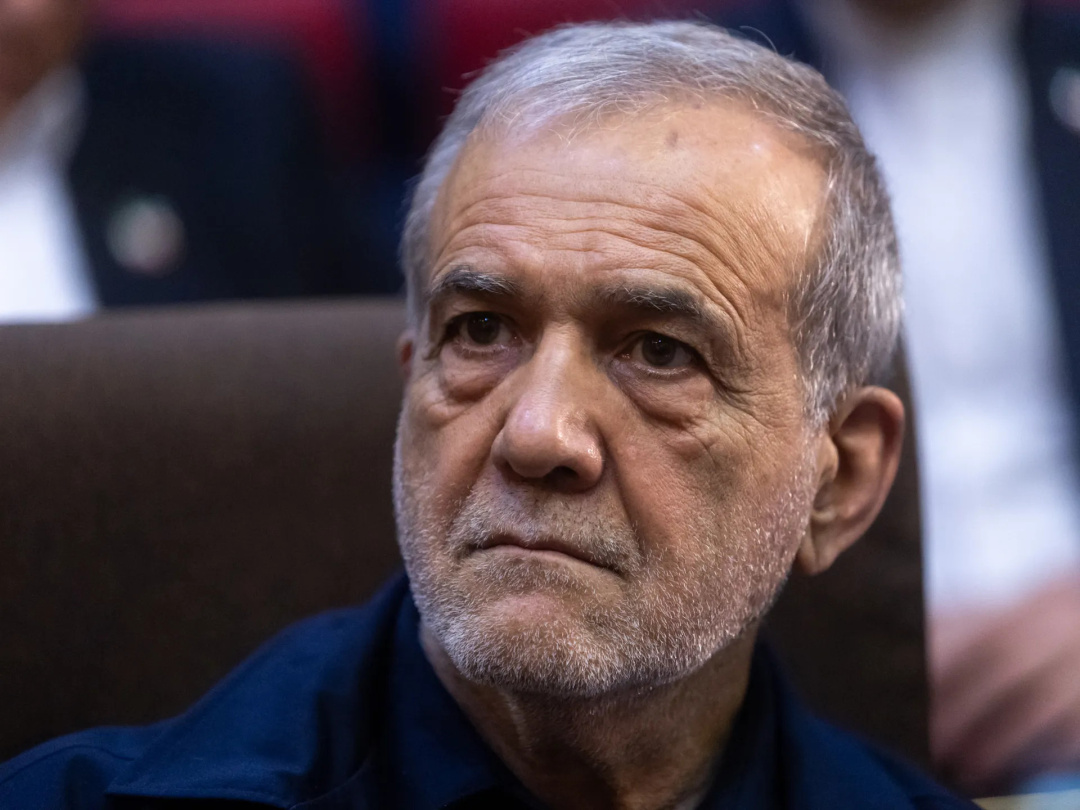
In a gripping episode that has all the makings of a political soap opera, the Iranian government has accused state television of censorship, setting the stage for a dramatic public showdown. It appears that the state broadcaster, IRIB, has decided that the truth is just too complicated for the viewing public, opting instead to cut critical parts of President Masoud Pezeshkian's speeches. Apparently, depicting a harmonious narrative about war and negotiations with the United States is a tall order when the internal politics of Iran resemble a tangled web of contradictions.
The Government Information Council, clearly channeling its inner drama queen, has publicly admonished IRIB for not airing segments of Pezeshkian's recent address, where he mentioned the private approval of negotiations by the country's Supreme Leader. This revelation was apparently deemed too hot for the airwaves, lest it suggest that Iran's leadership might actually, shockingly, have differing views on how to handle the U.S. relations. In a delightful twist, IRIB responded by asserting that broadcasting the president's segment would only highlight divisions that are apparently nonexistent, because nothing screams unity like ignoring inconvenient truths.
Still Beats Watergate:
Sponsor success. Continue reading:
The plot thickened when Foreign Minister Abbas Araghchi chimed in, likening his wartime interviews with U.S. media to wielding a sword. His expectation for state television to showcase Iran's robust diplomatic narrative fell flat, akin to a balloon deflating at a birthday party, with only pitiful subtitles making it to air. Meanwhile, hardliners have jumped into the fray, claiming that the recent memorandum of understanding with the U.S. was foisted upon the new Supreme Leader, illustrating the wildly entertaining back-and-forth between various factions within the government and the media.
If there was a prize for absurdity, it would undoubtedly go to the IRIB, which, despite being under scrutiny, has managed to maintain that its actions are in the national interest. The state broadcaster argues that airing dissenting opinions would only sow seeds of disunity, a notion that is as laughable as it is contradictory in a government that is supposed to embody unity. It seems that in the theater of Iranian politics, the only thing more slippery than diplomatic dialogue is the definition of national unity.
As mediators from Oman wade through the diplomatic quagmire, attempting to manage tensions in the Strait of Hormuz, one can only wonder if they are taking notes on how to navigate a country where the government and its media are engaged in a perpetual game of tug-of-war. With tensions boiling and narratives clashing, any hope for a cohesive strategy or message seems as elusive as a mirage in the desert.
In this ongoing saga, the only thing clear is that while the Iranian government may push for unity, the reality of its internal politics continues to play out like a poorly scripted drama, where each act reveals more absurdity than the last. Perhaps the next episode will reveal whether the state television can finally broadcast an unedited version of reality—or if it will continue to operate under the mandate that censorship is the best form of national unity.