Kansas Court Amendment: Billionaires Call It Democracy, We Call It Monopoly
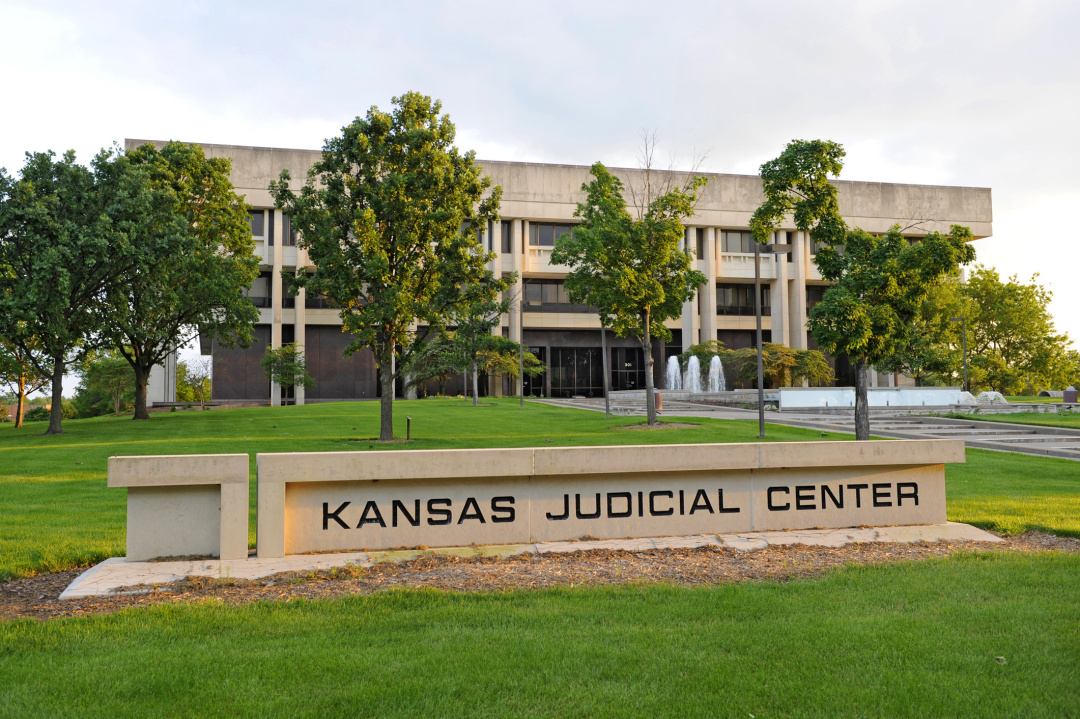
In a daring display of democracy, the Koch-Leo duo has unveiled their latest masterpiece: a Kansas constitutional amendment that promises to return power to the people while simultaneously handing it over to dark money interests. This amendment, aimed at replacing the merit-based selection of Supreme Court justices with direct elections, has been funded by an impressive array of special interest groups, all eager to transform the judiciary into a well-oiled political machine. It appears that in Kansas, the phrase “government of the people, by the people, for the people” has morphed into “government for the billionaires, by the billionaires, and definitely not for the people.”
The campaign touts itself as a triumph for democracy, conveniently ignoring the fact that it is merely a façade for expanding the influence of money in politics. With nearly $12 million flooding into the campaign coffers, voters are left to ponder whether they’re truly casting their ballots for change or simply participating in a farce orchestrated by financial titans who would rather not have their identities revealed. After all, nothing says “we care about your rights” quite like a mysterious dark money group named “Kansans for Democracy.” Who needs transparency when you have a catchy title?
Still Beats Watergate:
Sponsor success. Continue reading:
As Kansas voters prepare to head to the polls, they are bombarded with ads claiming that electing judges directly will bring about a golden age of fairness and justice. Yet, it’s hard to reconcile this with the historical reality that led to the establishment of merit selection in the first place. This was the result of a notorious scandal involving a former governor who pulled strings to install himself as Chief Justice. But who cares about history when billionaires are at the helm, promising a bright future?
The amendment’s proponents, backed by Koch’s Americans for Prosperity and Leonard Leo’s web of influence, are working hard to rewrite the narrative. Ads proclaim that electing judges worked well in the past, conveniently overlooking the public outrage that led to the reform in the first place. You see, in the world of political theater, facts often take a back seat to the narrative that best serves the agenda.
The irony is thick as Koch-funded groups pitch this amendment as a way to combat dark money in judicial elections, while simultaneously pouring millions into its promotion. It’s the classic “we’re here to help you” approach, right before they roll out a red carpet to their own interests. Meanwhile, state courts remain a vital check on legislative overreach, standing as the last bastion against a tide of regressive policies. But why uphold democracy when you can exploit it?
As the campaign progresses, one can’t help but feel a sense of déjà vu. This is just another chapter in a long saga of billionaires attempting to reshape the legal landscape to suit their desires. The Supreme Court has been transformed into a rubber stamp for corporate interests, and now state courts are the next frontier. If this amendment passes, Kansas may soon be known not just as the Sunflower State but as the playground for the wealthy elite, where justice is for sale at the highest bidder.
So, as voters head to the polls, let’s hope they see through the glittering facade of democracy that masks the true intentions behind this amendment. Because in the end, the only thing more transparent than the proposed system of judicial elections is the money that’s backing it: dark, murky, and undeniably influential. Welcome to Kansas, where democracy is just a word, and the real power lies with those who can afford to buy it.