Amish Shah's Primary Victory: A Wake-Up Call for Party Insiders
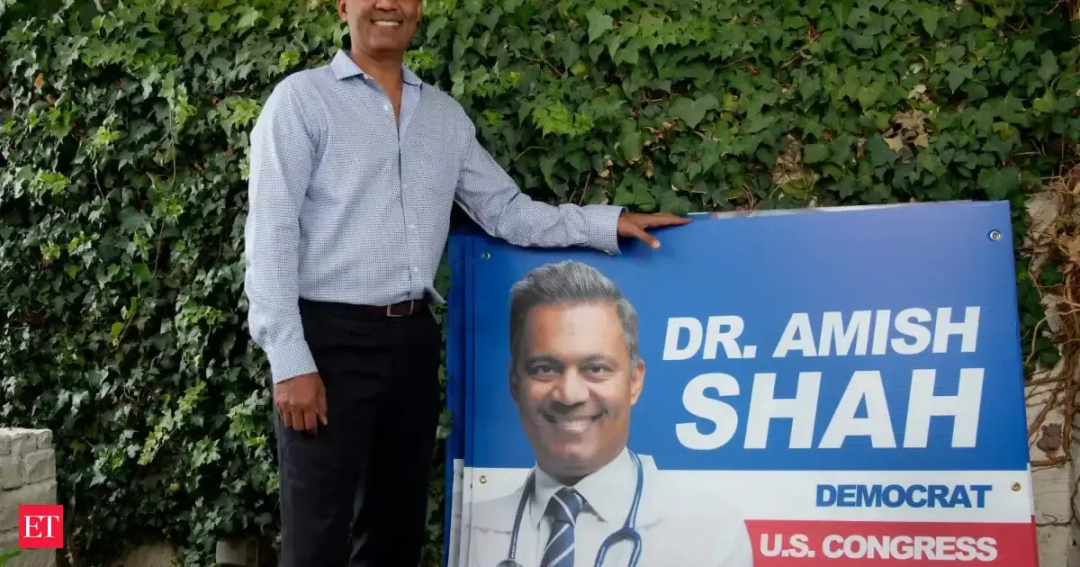
In a stunning upset that has party insiders clutching their pearls, Amish Shah has emerged victorious in the Democratic primary for Arizona's 1st Congressional District, defeating the establishment's favorite candidate, who was apparently endorsed by every Washington insider with a Twitter account. This shocking turn of events has sent ripples through the halls of power, leaving leaders to wonder if they should reconsider their criteria for picking candidates or if they should just invest in a better crystal ball.
Sources close to the situation have revealed that Shah's campaign was fueled not by traditional fundraising or endorsements, but rather by a grassroots movement fueled by an overwhelming desire for change—an idea that seems to be terrifyingly contagious among voters. In a bold move that shocked the political elite, Shah apparently engaged with voters instead of relying solely on focus groups and pollsters. Some have even suggested he might have gone door-to-door, which is practically unheard of for modern-day candidates who prefer to communicate via lavish fundraisers and glitzy advertisements.
Still Beats Watergate:
Sponsor success. Continue reading:
Meanwhile, Washington insiders are reportedly in damage control mode, scrambling to spin the narrative that Shah's victory is a sign of the electorate's fickleness rather than a blatant rejection of their preferred candidates. "It’s merely a blip on the radar of the political landscape," one anonymous source lamented, adding that losing a primary to a candidate who actually listens to constituents is just an unfortunate side effect of democracy.
Shah's opponent, who was heavily funded by D.C. power players, may now need to re-evaluate their approach to political campaigning. Perhaps next time, they will consider the bold strategy of not taking voters for granted or relying on the assumption that party loyalty is an automatic ticket to victory. After all, it seems that voters might prefer a candidate who doesn’t just show up during election season, but rather engages with them throughout the year.
As Shah prepares for the general election against Republican Jay Feely, analysts are already predicting a showdown that could redefine the future of Democratic politics in the district. If this primary was any indication, it appears that the electorate is ready for a shake-up, and they are no longer willing to accept the status quo dictated by the party establishment.
In a final twist, the establishment's attempts to downplay Shah's win might just backfire spectacularly. The more they dismiss his victory as an anomaly, the more they risk awakening a sleeping giant of public sentiment that favors authenticity over establishment-backed candidates. Who knew that listening to the people could be a radical concept in today’s political landscape?