New York’s Solar Push: A Rural Utopia or Just Elitist Sun Worship?
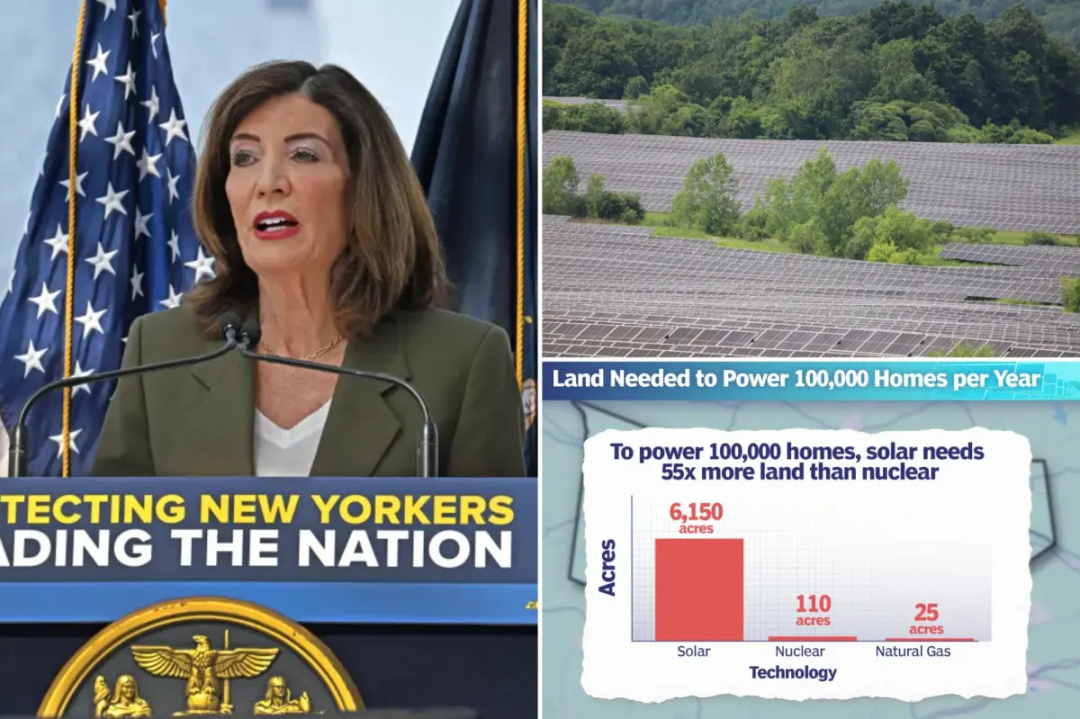
In a bold move that has both environmentalists and country music stars scratching their heads, Governor Kathy Hochul has unveiled plans to blanket upstate New York with solar panels, raising concerns about whether this initiative is a genuine green revolution or merely a display of elitist sun worship. The ambitious proposal, which could require an area the size of Paris to produce the energy equivalent of a single natural gas plant, has prompted stern rebukes from three federal agencies who seem to think that the governor is looking to paint the countryside with solar panels while the rest of us are left to fend for ourselves in the dark.
The irony, of course, is that Hochul's grand vision for renewable energy appears to come with a hefty price tag—one that rural residents may find daunting. Critics argue that while the governor is championing the sun's rays, she might be overlooking the needs of the people who actually live in these picturesque landscapes. After all, who wouldn’t want a few solar fields to block their views of rolling hills and golden farmland? It’s practically a public service!
Still Beats Watergate:
Sponsor success. Continue reading:
Adding to the melodrama, a country music star—yes, because nothing screams environmental advocacy like a Nashville twang—has stepped onto the stage to voice concerns over the project. This unexpected celebrity endorsement of the anti-solar sentiment has turned the campaign into a country song waiting to happen, complete with the heart-wrenching tales of farmers displaced by solar installations. Imagine it now: 'Take My Farm, But Leave My Tractor,' a ballad of loss and solar panels.
Meanwhile, the federal agencies have raised their eyebrows at Hochul's plans, suggesting that the bureaucratic machine may not be so keen on green energy if it means sacrificing the sanctity of rural America. Their concern? That this initiative might represent not just a push for renewable energy, but an elitist agenda that prioritizes aesthetics over the reality of farming and local livelihoods. After all, nothing says 'we care about you' like a sprawling sea of solar panels where crops once thrived.
In a world where everything from your morning coffee to your ride to work comes with a side of environmental guilt, Hochul’s vision may sound appealing. But as the sun rises over the state, it’s clear that the shadows of elitism loom large. The real question remains: will these solar fields provide sustainable energy, or just serve as a shiny distraction from the messy realities of policy-making?
As the debate rages on, one thing is for certain: no matter how many solar panels get installed, the real power lies in the hands of those who control the narrative. And right now, the narrative is as bright as the sun—though the shadows it casts may be darker than Hochul ever anticipated.