Homeland Security's Newest Enforcer: A Journey from Tribal Council to Border Patrol
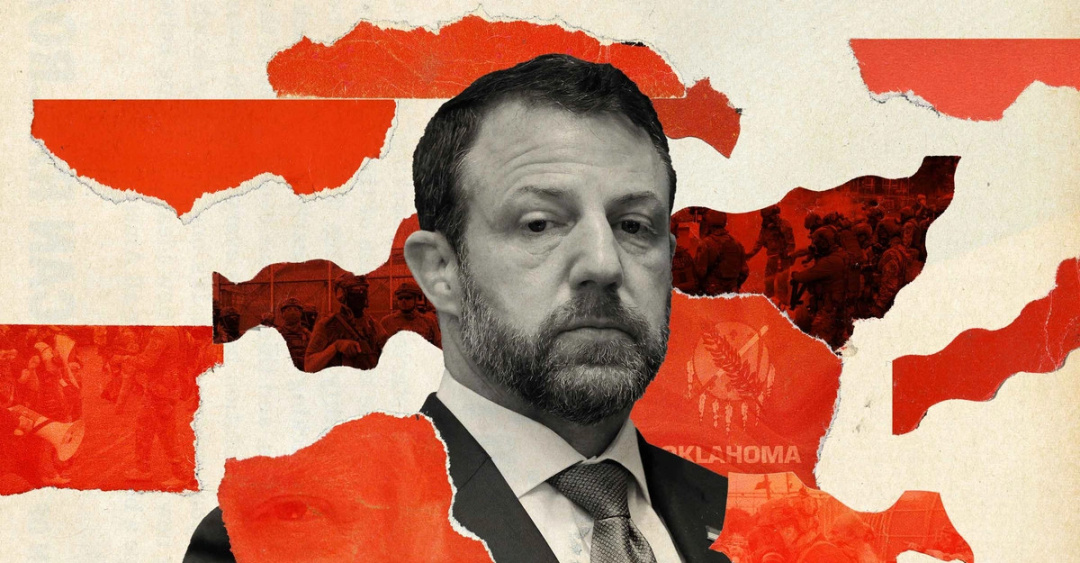
In a groundbreaking display of bureaucratic gymnastics, Markwayne Mullin has leaped from the serene pastures of Indian Country into the high-stakes world of immigration enforcement as the new Secretary of Homeland Security. His first major policy decision, which had all the permanence of a sandcastle at high tide, was rendered obsolete before the ink on his appointment could dry. In a stunning turn of events, ICE officers managed to turn a routine operation into a tragic spectacle, taking two lives and making Mullin’s inaugural press conference one for the ages.
The administration, ever the masters of damage control, swiftly pivoted to a new talking point: “It was a learning experience.” Yes, nothing says “we’ve got this” quite like an unintentional workshop on the consequences of overzealous enforcement. Mullin, who once campaigned on the promise of protecting his constituents, now finds himself in the ironic position of overseeing an agency that seems to excel at keeping its own policies in a state of flux.
Still Beats Watergate:
Sponsor success. Continue reading:
Mullin’s previous experience in tribal governance apparently prepared him for the chaos of Washington, where the only constants are contradictions and the occasional press release. His approach to immigration policy has been described as “innovatively forgetful,” a term coined after his department’s efforts to roll out initiatives that vanish faster than the chocolate cake at a White House dinner. When asked about his vision for Homeland Security, Mullin reportedly stated, “I think we need to be more responsive to the needs of the moment,” a sentiment echoed by countless officials who have mastered the art of the vague response.
As Mullin navigates the treacherous waters of immigration policy, he has discovered that the role of Secretary involves an unexpected amount of improvisation. Much like a magician pulling a rabbit from a hat, Mullin has made policies appear and disappear with alarming efficiency. “It’s like a game of whack-a-mole,” one anonymous source remarked. “Every time we think we’ve got something nailed down, it just pops back up somewhere else.”
With a tenure characterized by a series of rapid-fire missteps and a penchant for dramatic policy rollouts that last about as long as a TikTok trend, Mullin has certainly brought a unique flair to the Department of Homeland Security. Critics have pointed out that his strategy resembles that of a toddler with a crayon—lots of color but little coherence.
As the administration gears up for its next big show, one can only hope Mullin has a few more tricks up his sleeve. After all, in the theater of politics, it’s all about the performance, and the audience is always watching. Will he manage to turn the tide of public sentiment, or will he simply become another footnote in the annals of executive bewilderment? Only time will tell, but rest assured, the show must go on, and the spotlight is firmly on the Secretary of Homeland Security, whether he likes it or not.