UK and Argentina Engage in Diplomatic Tug-of-War Over World Cup Banner
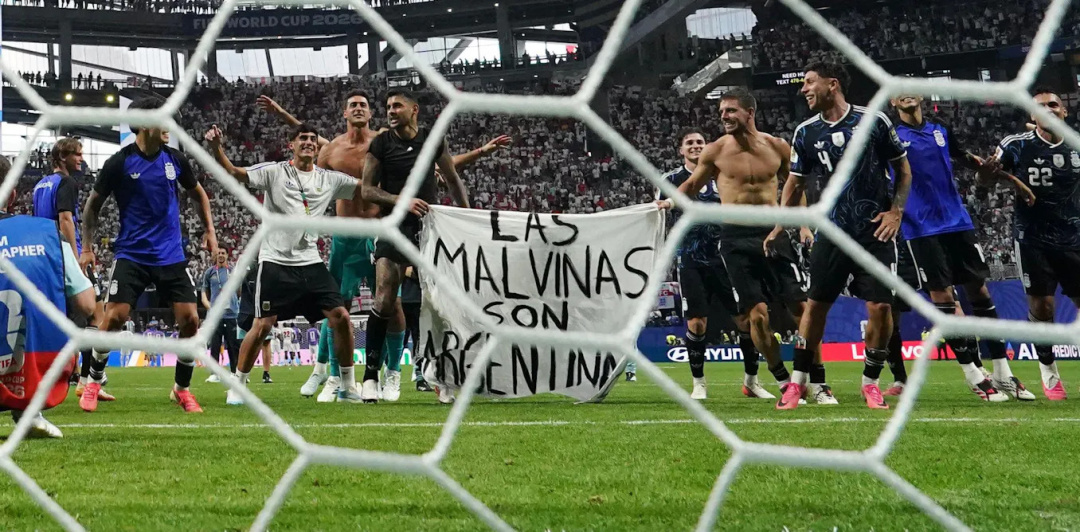
In a scene reminiscent of a geopolitical soap opera, Argentina's football team unfurled a banner during a World Cup celebration, boldly declaring "Las Malvinas son Argentinas". This audacious act has sent shockwaves through the UK, where politicians and press alike have reacted as if a rogue state had just launched a missile instead of a sports banner. The British media described the display as "shameless", and UK Secretary of State for Trade, Peter Kyle, denounced it as "entirely inappropriate". One can only imagine the horror in the halls of Westminster, where the prospect of a football team wielding such potent symbolism is taken as seriously as a military incursion.
In the aftermath, the British government has called for an investigation into FIFA’s lack of control over political messages at its events. Clearly, the idea that a football match could be a stage for political statements has caught them off guard. After all, when did sport and politics ever mix? Surely, the last time that happened was at the inception of the Olympic Games, right?
Still Beats Watergate:
Sponsor success. Continue reading:
Meanwhile, Argentine President Javier Milei, ever the optimist, has proclaimed that sovereignty over the Falklands is just around the corner, thanks to his diplomatic charm. However, his claims are met with a healthy dose of skepticism, as Argentina's previous leaders have proven that fiery rhetoric does not equate to tangible progress. The banner waving in the stadium may have stirred up national pride, but the reality on the ground remains unchanged. If anything, it highlights the absurdity of using a football match to settle centuries-old disputes.
As we watch this diplomatic dance unfold, one must wonder about the real stakes at play. With potential oil drilling off the coast of the Falkland Islands on the horizon, tensions are sure to rise like a poorly executed penalty kick. The Sea Lion oil field could become the new hot spot for international drama, as Argentina and the UK jockey for position, with the Falkland Islanders themselves, once again, caught in the crossfire.
And let’s not forget the role of the United States, whose officials have recently defended Argentina's right to free speech—an ironic twist given their own historical approach to international relations. Andrew Giuliani, head of the White House FIFA task force, appears to have taken a page from the playbook of diplomatic double-speak. It seems that free speech is only a priority when it aligns with current political interests.
As the world watches this latest episode of international football diplomacy, one thing is clear: the banner may have been unfurled in a stadium, but the real battleground is the ever-complicated landscape of international law and national pride. With both nations clinging to their narratives like fans clutching their team jerseys, the question remains—who will be the first to score a meaningful goal in this ongoing saga?