Starmer's Exit: The Grand Political Tumble of Leadership in Downing Street
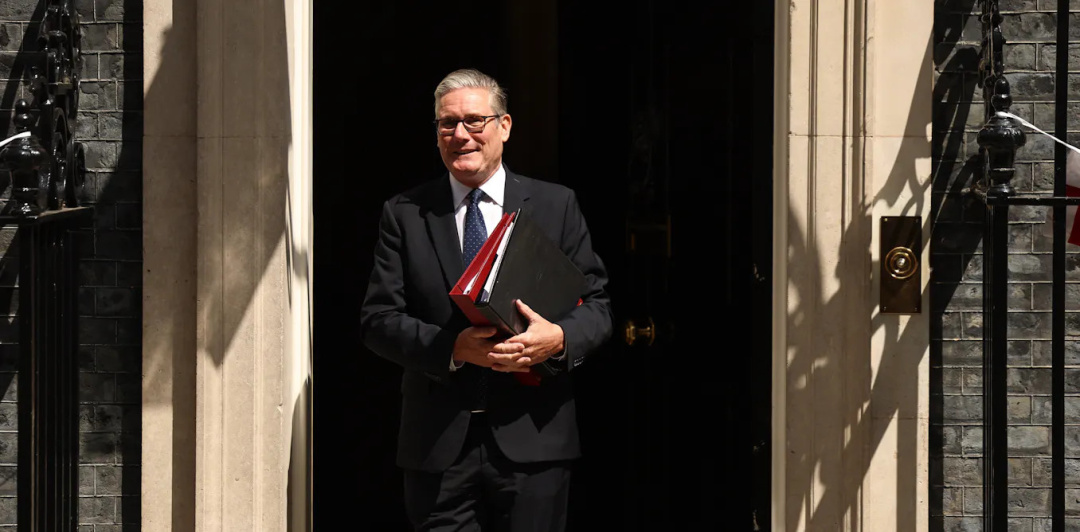
In a stunning display of political choreography, Keir Starmer has bid adieu to Number 10, officially handing over the keys to the kingdom to Andy Burnham, the newly minted Prime Minister. This transition, scripted as if it were a royal engagement, raises an age-old question: is there a better way to pass the baton than by playing a game of political hot potato? Apparently not, as the UK continues to embrace its favorite pastime: swapping leaders like they’re trading cards.
Starmer’s exit was anything but surprising, given the trend of political leaders exiting stage left after a series of unfortunate events. After all, who could forget the six years of labouring under Starmer’s leadership, which turned from the promise of national renewal into a chaotic series of U-turns? It’s as if the Labour Party’s motto has shifted from “For the Many” to “For the Maybe,” as they navigated a minefield of public dissatisfaction and party discontent.
Still Beats Watergate:
Sponsor success. Continue reading:
And what a performance it was! Starmer, who once promised to bring Labour back from the brink, ultimately found himself in a precarious balancing act, trying to appease a disenchanted electorate while simultaneously dodging the internal trapdoors of his party. It’s almost as if his leadership was a real-life episode of a political sitcom, where the punchline was hidden behind a curtain of disillusionment.
Now, as Burnham steps into the spotlight, the question looms: will he be able to juggle the flaming torches of governance while dodging the rotten tomatoes thrown by disgruntled voters? The awkward transition from metro mayor to Prime Minister is akin to a regional theatre actor landing a Broadway role—just because you can strut on stage in one arena doesn’t mean you’ll dazzle in another. Burnham’s task is Herculean: convincing the public that he’s not just a puppet on a string, but a capable leader who can indeed steer this ship through turbulent waters.
The ceremonial “kissing of hands” with the king is a charming touch, but it does little to assuage concerns about whether this new leader will rise to the occasion. After all, Burnham’s popularity in Manchester doesn’t necessarily translate to a nationwide embrace. In the grand scheme of British politics, where voters are as fickle as the weather, his honeymoon period could be as short-lived as a summer rain shower.
While Burnham may be keen on setting a new tone in his first speech outside Number 10, one can only hope it doesn’t sound like a rehashed TED Talk. The cabinet reshuffle that follows will be a critical moment, as Burnham attempts to assemble a team that doesn’t resemble a collection of disgruntled cats. Can he resist the urge to just fill the seats with cronies and actually bring in a diverse range of voices? The stakes are high, and the public is watching closely.
As the political machine churns on, one thing is certain: the theatre of leadership will continue to fascinate and frustrate. With Burnham at the helm, let’s hope this act won’t end in a tragicomedy, but rather a storyline that leads to genuine change. The British public deserves a plot twist filled with substance, rather than more of the same old political farce. The show must go on, but let’s hope it’s a better script this time around.