Administration Announces New Two-State Solution Initiative: More Empty Promises
In a breathtakingly choreographed press conference, the White House unveiled its latest initiative that promises to revitalize the long-dormant two-state solution for the Israeli-Palestinian conflict. The event featured the President surrounded by a cast of bipartisan cheerleaders, all eager to reiterate the administration's commitment to a vision that, at this point, feels more like a mirage in the desert than a legitimate political framework.
"Today, we are proud to announce the Two-State Solution 2.0," declared the President with all the gravitas of a game show host revealing the next contestant. The plan, while heavy on optimistic rhetoric, was notably light on specifics, leading many to wonder if the administration could even locate a map of the relevant territories, let alone suggest viable borders.
Still Beats Watergate:
Sponsor success. Continue reading:
According to sources within the White House, the new initiative is designed to provide politicians with a handy talking point for their next campaign. After all, nothing says 'I care' like a vague commitment to a solution that has proven elusive for decades. In fact, many believe that the phrase 'two-state solution' has become little more than a political talisman, waved about by leaders eager to signal virtue without the messy business of actual engagement.
Inside the Oval Office, staffers have reportedly been instructed to use the initiative as a shield against any probing questions about the realities of the Israeli occupation. A leaked memo advised, "When confronted about the growing settlements and humanitarian crises, simply pivot to the two-state solution talking points. Remember, it's all about deflection!"
Meanwhile, the situation on the ground tells a different story. As the President spoke, Israeli bulldozers were hard at work demolishing homes in Palestinian territories. Local leaders expressed frustration that while they were busy trying to survive, the political elite were busy crafting elaborate narratives that bore no relation to the daily realities faced by those in the region.
One senior official within the State Department, speaking on condition of anonymity, acknowledged the absurdity of the situation. "It's like we’re trying to sell a vintage car that’s been in a wreck. Sure, it’s a classic, but it doesn’t run anymore, and the tires are flat!"
Critics have pointed out that simply uttering the phrase 'two-state solution' has become a form of political alibi, allowing politicians to sidestep any serious discussion about the need for justice and equality. The administration’s latest initiative seems to fit neatly into this tradition of empty promises, where the real action takes place far from the cameras and press briefings.
As the world watches a humanitarian crisis unfold, it remains to be seen whether this new initiative will yield anything more than a few headlines and a collective shrug from those who have grown weary of the political theater.
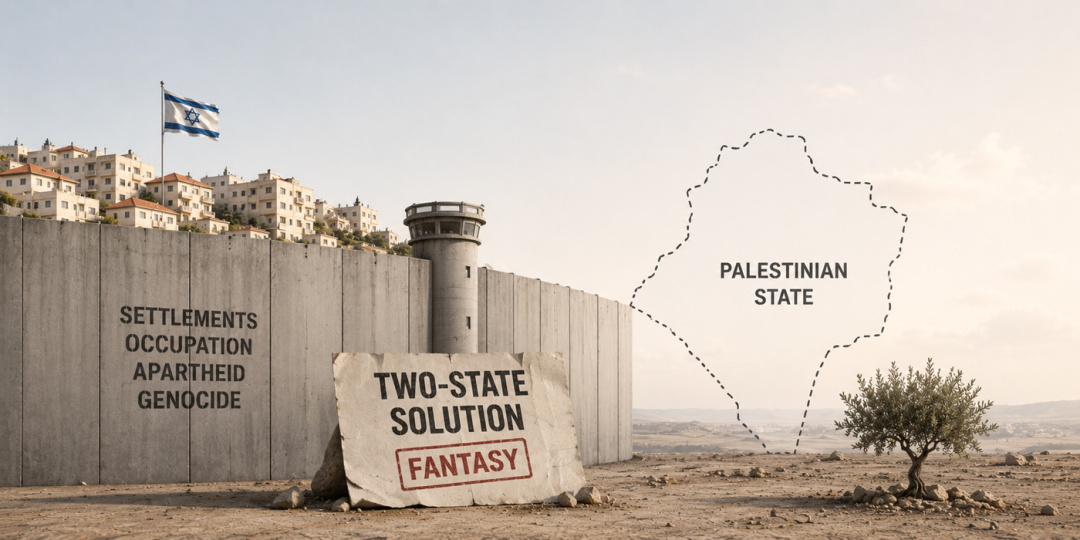
In the end, the two-state solution may remain a fantasy—a convenient one for politicians, but a painful reality for those living in the crosshairs of a conflict that continues to defy resolution. Perhaps the greatest irony is that in a world where solutions are needed, the most profound silence often speaks the loudest.