CDC Nominee Pledges Loyalty to Vaccines, But Not to Science
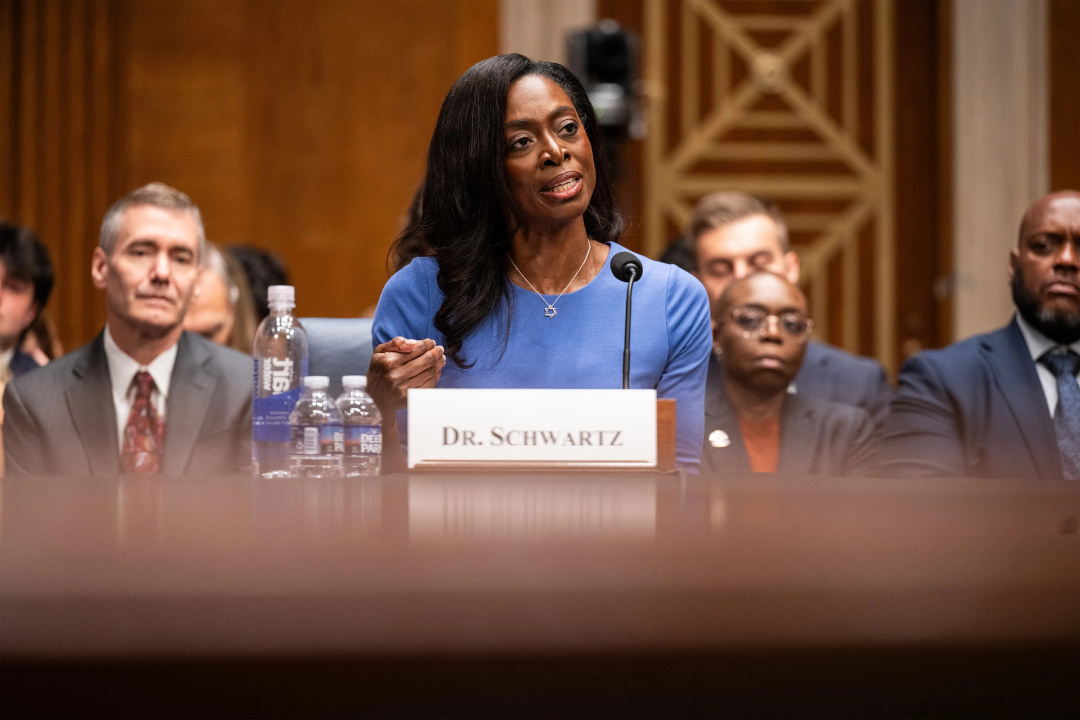
In a riveting performance that could only be described as a combination of a high-stakes game show and a bureaucratic ballet, Erica Schwartz, President Trump's nominee for the CDC, proudly donned her pro-vaccine tiara during her Senate confirmation hearing. Schwartz proclaimed her unwavering belief in the power of vaccines, including the much-maligned mRNA shots, all while expertly sidestepping any commitments to break free from the gravitational pull of Health Secretary Robert F. Kennedy Jr.'s infamous anti-vaccine black hole.
Schwartz, who has a glittering career of 'vaccinating people throughout her entire career in uniformed services,' assured the Senate committee that her top priority is to restore trust in the CDC, a mission that could be likened to polishing a tarnished trophy. "I will follow the science wherever it leads," she declared, as if the science itself was sitting in the room with her, eagerly awaiting its next directive.
Still Beats Watergate:
Sponsor success. Continue reading:
The hearing, filled with tension and the kind of dramatic pauses usually reserved for soap operas, saw Schwartz navigating a minefield of skepticism from both sides of the aisle. Senators raised eyebrows over whether she would be able to maintain any independence from Kennedy, who is known for his rather unique interpretations of scientific evidence. Schwartz's refusal to firmly distance herself from Kennedy's ideologies left many wondering if her commitment to science was merely a well-rehearsed line in a political script.
As Schwartz assured everyone that she would "never compromise" on science, one couldn't help but imagine her in a superhero cape, ready to battle misinformation. Yet, the question loomed—was she prepared to face the real villains: political agendas and bureaucratic red tape? The Senate committee, sensing a potential cliffhanger, pressed her on whether she would stand up to rhetoric that isn't based in actual science.
In a moment that could only be described as a bureaucratic nod to transparency, Schwartz pledged her commitment to 'radical transparency'—a term that might have left many wondering if her idea of transparency meant simply being a window through which the public could see the chaos of the administration's health policies. Her promise to restore trust in the agency, tarnished by years of political interference, felt like a heartfelt plea to a skeptical audience, akin to a magician asking for applause after revealing a rather underwhelming trick.
Meanwhile, as Schwartz sang the praises of nutritional education and fitness assessments—Kennedy's latest crusade—one could almost hear the faint echoes of a new slogan being crafted: "Make America Healthy Again!" If only restoring credibility to the CDC could be as simple as a catchy campaign slogan.
As the hearing concluded with the sound of senators exchanging cautious glances, Schwartz's path to confirmation remained a complex web of political maneuvering. Would she emerge as the champion of science she promised to be, or would she become just another cog in the administration's ever-evolving health machine? The audience is left on the edge of their seats, popcorn in hand, as they await the next act in this ongoing political drama.