Space Force Nominee Claims $71 Billion Budget Essential for Defeating Space Foes
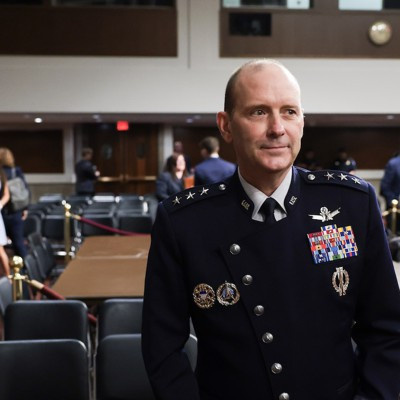
In a display of bureaucratic finesse that could only be rivaled by the best of Hollywood’s star-studded blockbusters, Lt. Gen. Douglas Schiess recently graced the Senate Armed Services Committee with a confirmation hearing that was as exciting as a lukewarm cup of coffee. With a budget request that could buy the entire state of Delaware, Schiess assured lawmakers that the Space Force needs a cool $71 billion to fend off the imminent threats posed by extraterrestrial adversaries—namely China and Russia. Who knew that interstellar diplomacy required such a hefty price tag?
Schiess, the man poised to take the reins of America’s cosmic endeavors, stated with the gravitas usually reserved for Oscar acceptance speeches, "I would say that the $71.1 billion that the president has asked for is exactly what we need." Apparently, the threat of space lasers and satellite-killing drones is enough to justify a budget that would make even the most extravagant Hollywood producer blush. Not to mention, this is the same budget that faced a few hiccups when House leaders decided to play hardball with the Trump administration’s reconciliation proposal. But the show must go on!
Still Beats Watergate:
Sponsor success. Continue reading:
As Schiess patiently explained, the Space Force is underfunded and needs the cash to support major joint operations. It appears that the Pentagon isn’t just preparing for war; it’s gearing up for a stellar reality show. He emphasized the importance of balancing urgent readiness with modernization, because nothing says “We’re ready for the next space war” like a solid financial investment into space-enabled kill chains. It’s all about ensuring that the U.S. military can launch rockets while simultaneously preparing for a galactic bake-off.
During the hearing, only a handful of senators bothered to show up, leading to speculations that Schiess’s nomination was about as controversial as a dog park policy. Sen. Angus King even remarked that the lack of a large turnout bodes well for Schiess, which somehow makes sense in a world where lackluster hearings are now seen as a positive sign of confidence. Non-controversial is the new black in the realm of space warfare, after all.
While discussing his plans for the Space Force, Schiess promised to focus on improving combat readiness and expanding launch infrastructure, reportedly envisioning a future where the U.S. launches hundreds of rockets annually, all while maintaining a sense of decorum. He expressed a desire to scale up operations to meet the “unprecedented increase” in launch tempo, which sounds impressive until you realize that it’s just code for “We need a lot more rockets.”
In a moment that could only be described as a bureaucratic masterstroke, Schiess concluded his testimony by assuring the committee that he would have no hesitation in providing military advice, even if that advice clashed with the views of other military leaders or—dare we say—the President. This bold commitment comes at a time when the Pentagon is navigating a command climate that penalizes honest evaluations, a reality that could be likened to asking a magician to reveal their tricks.
As the nation gears up for intergalactic glory, one thing is clear: with Schiess at the helm, the Space Force is ready to boldly go where no budget has gone before, all while ensuring that every dollar is spent wisely—on space lasers, tactical moon bases, and perhaps a few luxury space hotels for our extraterrestrial allies.