Revisiting Watergate: Puppet Masters and Bureaucratic Ballets
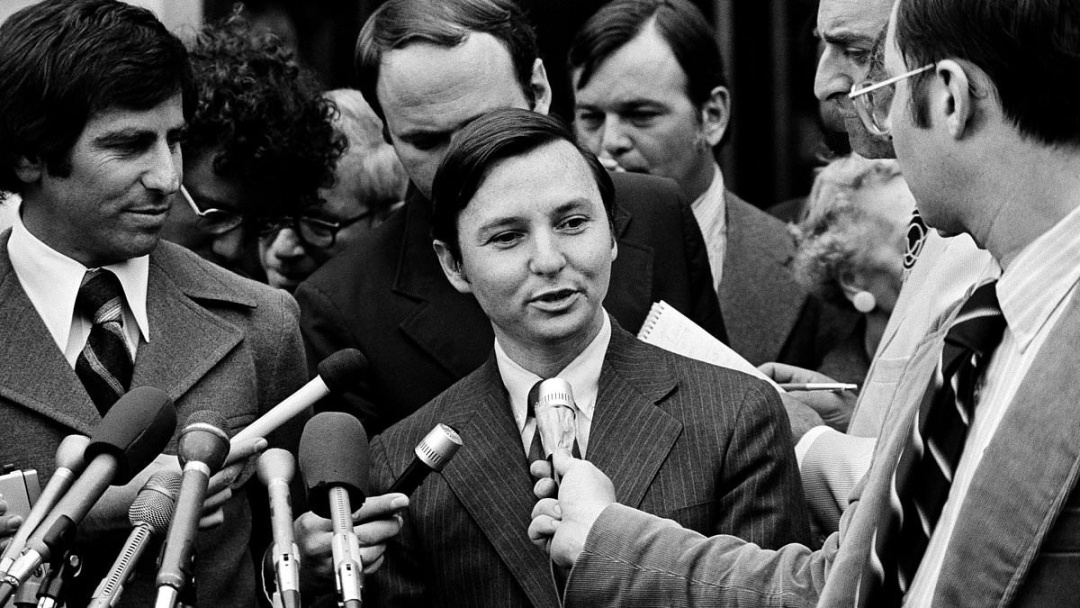
In a recent revelation that might as well have been scripted by a Hollywood screenwriter, Donald Segretti, that ever-charming face from the Nixon era, lamented his role in the Watergate scandal. Segretti, who claims he was merely a puppet in a grand political marionette show, has now emerged from the shadows to warn us about the current state of Washington. He’s right; it’s a circus in there, and the clowns have taken over the ring.
Imagine a briefing room filled with aides, all nodding vigorously while the president reads from a teleprompter like an actor who forgot his lines. The choreography is as meticulous as a ballet, with officials pirouetting around questions, ducking and weaving like seasoned athletes. Segretti’s warnings ring true: we’re witnessing a repeat performance of bureaucratic incompetence, where the only thing more inflated than the egos are the promises made to the public.
Still Beats Watergate:
Sponsor success. Continue reading:
The irony is thick enough to cut with a knife. Just as Segretti was sacrificed on the altar of political expediency, today’s bureaucrats are being schooled in the fine art of plausible deniability. They’ve learned that when the going gets tough, the tough get creative—especially with their definitions of “transparency.” If only the Founding Fathers could see how their sacred documents have morphed into a series of elaborate smoke-and-mirror tricks, they would be rolling in their graves, perhaps even demanding a refund on their investment in democracy.
As we watch today’s players take the stage, it’s hard not to feel a sense of déjà vu. The White House is a revolving door of appointees who seem to specialize in the fine art of getting thrown under the bus. From “acting” secretaries to “temporary” directors, the game is on. The real question is not who will be next to resign but rather who will be left standing after the inevitable scandal erupts.
In this bureaucratic ballet, the music is provided by lobbyists, whose donations sway the tempo of political decisions like a maestro with an orchestra. The only consistent note is the dissonance between public promises and private actions. While citizens are led to believe that their voices matter, the real decisions are made in dimly lit rooms where power brokers trade favors like baseball cards.
So, what should we take away from Segretti’s retrospective? It’s a reminder that history has a funny way of repeating itself. Just as Nixon’s team once thought they could outsmart the system, today’s leaders are dancing dangerously close to the same pitfalls. Perhaps it’s time for a new choreography—one that doesn’t involve stepping on the public’s toes.
In the end, Watergate was just one act in a long-running political soap opera. If Segretti is to be believed, we are merely witnessing the sequel, with a cast of characters that would make Shakespeare proud. As the curtain rises on the next scandal, let’s hope the audience is paying attention, because in this theater of the absurd, the show must go on.