Supreme Court to Trans Athletes: Sorry, Wrong Gender!
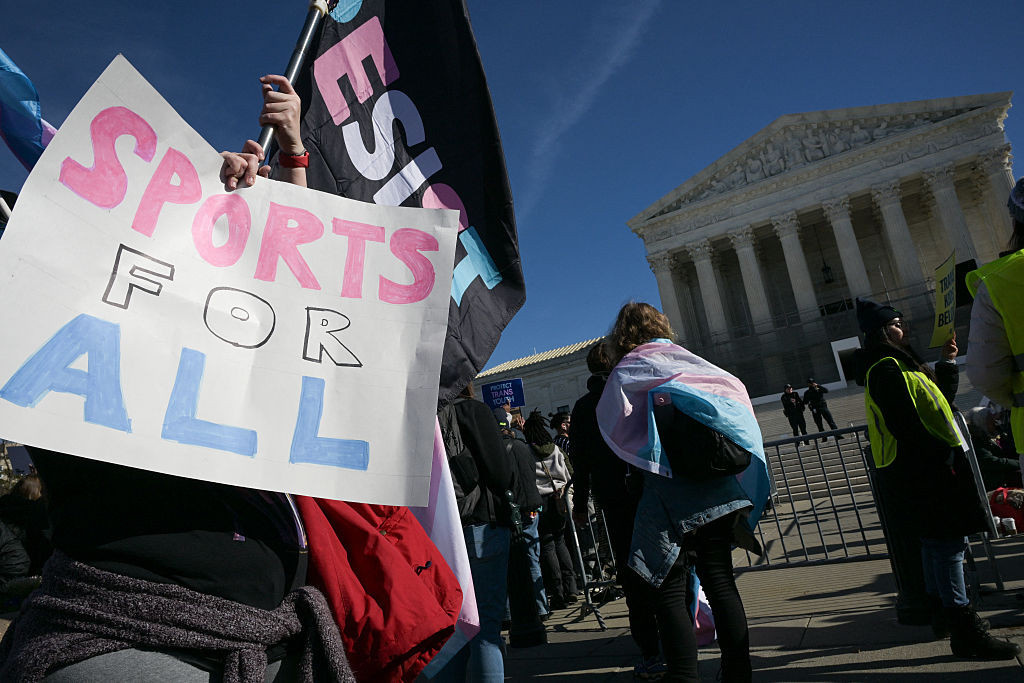
In a stunning display of legislative acrobatics, the Supreme Court has decided that states can slam the door on transgender students eager to play sports consistent with their gender identity. The ruling, which could easily have been pulled from a dystopian novel, has left many wondering if the justices were practicing for a new Olympic sport: political gymnastics. As states continue to enact laws that would make even the most seasoned exclusionists blush, the Court’s decision seems less about equal rights and more about putting on a show for the voters who enjoy a good spectacle of exclusion.
Feminist organizations and civil rights advocates have responded with a chorus of outrage, arguing that this decision is just another act in a larger drama of discrimination. Daniela Diaz from URGE: Unite for Reproductive & Gender Equity called the ruling “another blow” in a series of legislative punches thrown at trans youth, framing the situation as an extreme case of misdirected political venting. According to her, the ruling serves no purpose other than to further alienate young people who simply want to kick a ball or shoot some hoops without having their identities scrutinized by those who would prefer them to remain invisible.
Still Beats Watergate:
Sponsor success. Continue reading:
Justice Ketanji Brown Jackson, in a passionate dissent that could be mistaken for a rallying cry, argued that discrimination against transgender students is discrimination based on sex—something that should have been obvious to the majority. One might think that the justices would have taken the opportunity to show a little gender sensitivity, but it seems they were too busy trying to keep their balance on the high wire of political correctness, or lack thereof.
Kelley Robinson, president of the Human Rights Campaign, added that the ruling opens the floodgates for harassment and intimidation, warning that when politicians start labeling kids as “the wrong kind of girl,” it’s a slippery slope to societal chaos. After all, if any girl could be scrutinized for not fitting an antiquated mold, who’s next? The ruling seems to suggest that the only thing required to participate in sports is a birth certificate, while actual human dignity takes a backseat.
Rep. Mark Takano pointed out that states should be tearing down barriers to participation, not erecting them like some modern-day Berlin Wall of sports. Instead of creating inclusive environments, states are opting for exclusionary practices, seemingly forgetting the original point of sports: teamwork, camaraderie, and having fun.
As Dr. Jamila Perritt from Physicians for Reproductive Health noted, this decision is just one more entry on a long list of systematic attacks against transgender individuals. It is almost as if the Court believes that by blocking access to sports, they are somehow protecting the sanctity of competition rather than acknowledging that sports should be a welcoming space for all.
Maya Wiley connected this ruling to a broader strategy of division, linking the attack on trans athletes to other assaults on civil rights. It seems that the only thing the ruling accomplishes is to reinforce the idea that the right to play is not a right at all if you don’t fit a certain mold. As concerns over voting rights, immigration, and civil liberties swirl, the trans athlete decision stands out as yet another attempt to create a divide among us.
In a world where more than 2,600 anti-trans bills have been considered since 2020, this ruling marks a significant moment in the ongoing battle for equality. While courts may attempt to play the role of impartial arbiters, the reality is that they are often just as entangled in the political machinations of the moment as any elected official. Perhaps it’s time to remind the justices that sports are meant to be about inclusion, not exclusion, and that the only score that should matter is how many people are allowed to play without fear of retribution. In the game of life, everyone deserves a shot at the title, and it’s high time the rules reflect that.