Colombian Embassy in Jerusalem: A Diplomatic Gymnastics Routine
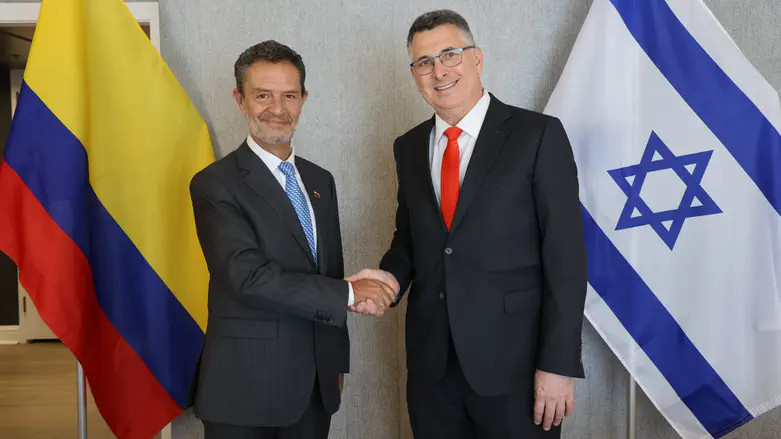
In a stunning twist of diplomatic flair, Colombia's newly minted Foreign Minister Omar Bula Escobar has taken a leap into the political gymnastics arena, promising to open an embassy in Jerusalem while elegantly sidestepping the legacy of former President Gustavo Petro. One can only admire the deftness required to flip from severing ties with Israel to fully embracing it like an old friend you forgot you had. This is not just diplomacy; it’s a full-on cartwheel of foreign policy.
The announcement comes hot on the heels of a tense electoral victory by President Abelardo de la Espriella, who has made it abundantly clear that his administration is all about tightening relationships with Israel and the United States—because who doesn’t love a good geopolitical makeover? One might say it’s akin to a political makeover show where last season's drama is just swept under the rug, or better yet, turned into a new series altogether.
Still Beats Watergate:
Sponsor success. Continue reading:
During a recent meeting in Washington, Bula Escobar and Israeli Foreign Minister Gideon Sa’ar agreed on this exciting new chapter of diplomatic relations. They even discussed mutual visa abolition like it’s a fun new app feature. Imagine the thrill of traveling without barriers—unless, of course, you count the barriers of political contradictions.
Meanwhile, the ghost of Petro lingers in the air, the man who once severed ties with Israel and even considered opening an embassy in Ramallah. Talk about a plot twist! Petro’s administration was known for its stark criticism of Israel, making this recent about-face feel like a poorly scripted soap opera. The narrative has shifted faster than you can say ‘diplomatic relations,’ as Colombia now seeks to restore what it lost—along with a few old friendships.
The Israeli Foreign Ministry’s statement is straight out of the ‘How to Spin a Narrative’ playbook, assuring everyone that preparations for the new ambassador to Bogotá are already underway. It’s as if they’re trying to convince us that restoring ties is as easy as flipping a switch. Just like that, Colombia is ready to reclaim its spot in the international arena, or at least its embassy in a city that’s been at the center of so much controversy.
And let’s not forget the MASHAV program, which promises increased assistance to Colombia, because nothing says ‘I’m here for you’ quite like strings attached to aid. This partnership seems to be a perfect match, like peanut butter and jelly, or perhaps more accurately, like a political alliance and a shiny new embassy—both equally sticky.
As this diplomatic ballet unfolds, one can only wonder how long before someone trips over the contradictions. In the world of international relations, it seems, the only constant is change—and a healthy dose of irony. So here’s to Colombia, flipping its diplomatic script and hoping the audience forgets the last act. The show must go on, and we’re all just here for the popcorn and the unpredictable plot twists.