Trump Asks Contractors to Keep Congress in the Dark—Literally!
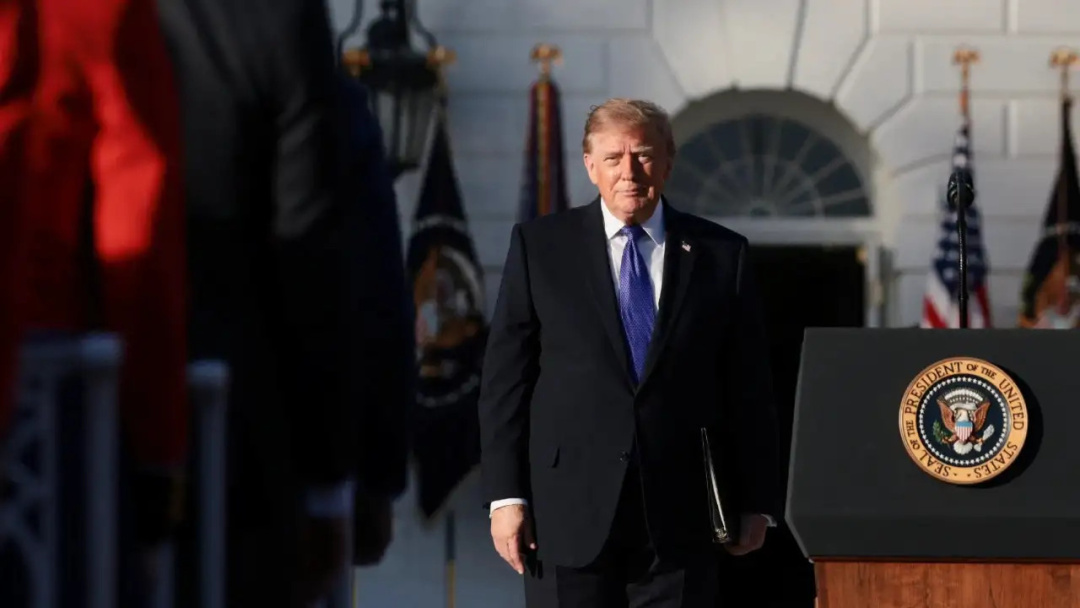
In a bold stroke that could make the opacity of a black hole look like a glass of water, President Trump has issued an executive order instructing federal contractors to consult his administration before responding to congressional inquiries. This directive not only asks contractors to coordinate with the White House but also advocates for the withholding of any information deemed 'privileged' by the administration. This begs the question: is the White House trying to protect executive privilege, or is it just hiding behind it like a child playing peekaboo?
As the Democrats prepare to take control of Congress, it appears Trump's administration is pulling out all the stops to ensure that the light of scrutiny barely flickers. Under this new order, failure to comply could result in severe penalties including the termination of contracts. It's like a new game of corporate chicken—will contractors keep their jobs, or will they spill the beans? Either way, the stakes couldn't be higher, and the irony couldn't be thicker.
Still Beats Watergate:
Sponsor success. Continue reading:
Democrats, for their part, have cried foul, describing this move as a blatant attack on Congress’s constitutional right to conduct oversight. They may as well be shouting it from the rooftops, as their attempts to preserve transparency seem to be met with a silent treatment from the Oval Office. Representative Jamie Raskin, a leading voice in the Democrats’ oversight committee, labeled the order "totally unprecedented and blatantly unlawful," as if the White House is handing out tickets to a one-man show titled 'The Emperor's New Clothes'.
In an era where transparency should be a given, this executive order not only raises eyebrows but also an entire forest of questions. Are we to believe that executive privilege is under siege from Congress? Or is this merely a ploy to shield questionable practices—like funneling funds to businesses linked to the Trump family—from an incoming wave of scrutiny? Such actions suggest that the administration is less about protecting privilege and more about protecting itself.
The White House has framed its stance as an effort to shield sensitive information from congressional overreach. Of course, having your cake and eating it too has never been so literal: protect the information, but make sure it’s your information that stays protected. It’s a culinary delight of constitutional confusion where the recipe includes just a dash of 'We know you want answers, but you can’t have them.'
As contractors weigh their options, one can only wonder how long it will be before they start requiring special training in the art of dodging questions. At this point, it's clear that the administration is not interested in wielding accountability like a sword, but rather in hiding behind a shield of bureaucratic vagueness. In the grand theater of Washington, the curtain may soon rise on a new act: "The Great Information Heist," where the audience will be left guessing what, if anything, is true.
The Rule of Secrecy Prevails
With the White House tightening the reins on information flow, one can only picture a future where contractors are left twiddling their thumbs, wondering if their next response to Congress will earn them a gold star or a boot. The irony is delicious—after all, this is the same administration that campaigned on promises of transparency and accessibility.
As the situation unfolds, it seems that the only thing we can count on is the administration’s commitment to maintaining a veil of secrecy. It’s a world where the truth is kept in a vault, and the key is firmly in the hands of those with the most to lose. Maybe the next executive order will be to officially change the definition of 'transparency' to 'opaque'—because at this point, it’s the only thing that makes sense.
Your takeaway
In the end, the question remains: how much longer can this administration pretend that obscurity is the same as security? As contractors brace for the repercussions of this order, one can only hope that Congress manages to find a way to shine a light on the shadows cast by this latest directive. After all, when it comes to accountability, the only thing worse than a lack of answers is a lack of questions.