El Salvador's Bukele Launches Reelection Bid, Promises More of the Same
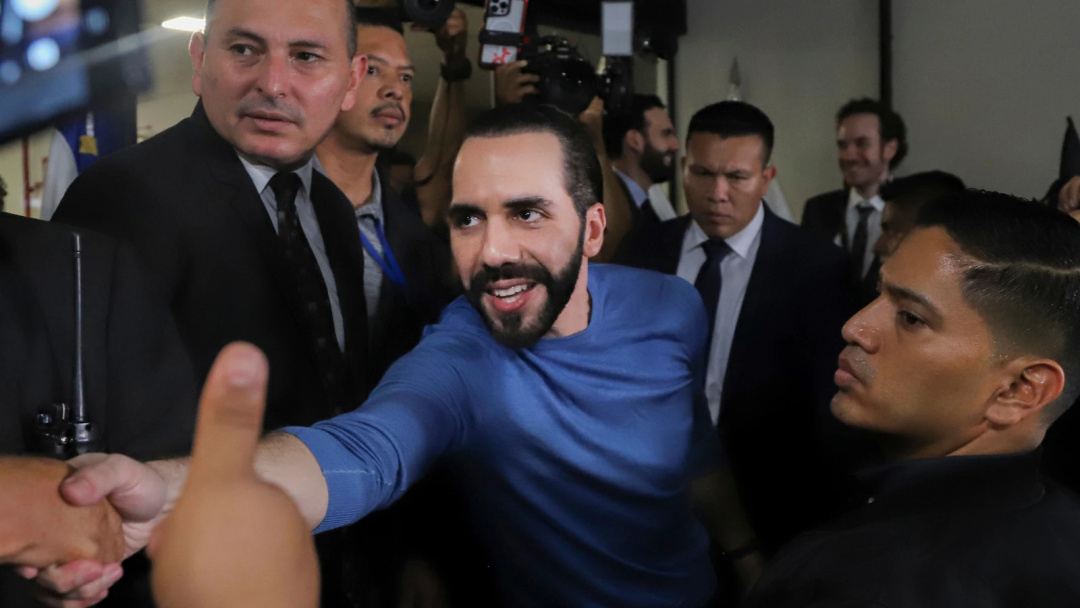
El Salvador's President Nayib Bukele has officially thrown his hat into the ring for a third term, demonstrating once again that in the world of politics, where the line between legality and theatricality is as thin as his campaign promises. Thursday night marked the grand unveiling of his candidacy, complete with the usual fanfare, as supporters waved signs and police cars escorted him to the electoral tribunal. It’s a sight so predictable that even the script must be asking for rewrites.
With his approval ratings hovering around an impressive 90%, courtesy of his ongoing war against gangs, Bukele appears to be on a glide path to reelection. It’s almost as if he’s turned the country’s political scene into a reality show where the villain is always a gang member, and the hero is, of course, him, armed with the authority to do just about anything. Critics might call it authoritarianism; Bukele calls it a decisive leadership style. After all, who needs checks and balances when you have a supermajority in Congress ready to pave the way for your continued dominance?
Still Beats Watergate:
Sponsor success. Continue reading:
But let’s not forget the dramatic backdrop of his campaign: the simultaneous deployment of troops to Haiti to tackle gang issues because nothing screams ‘I care about public safety’ like sending soldiers abroad while keeping a tight grip on your home turf. It’s a strategic move that has left many scratching their heads, wondering whether this is a humanitarian mission or merely a distraction from his increasingly authoritarian tendencies. Critics claim this offensive is merely a political stunt, designed to garner public support just ahead of elections, but with Bukele's talent for spectacle, who can really tell?
His approach to governance has been a masterclass in draining the swamp only to refill it with his handpicked loyalists. The constitutional changes he champions, which conveniently allow him to seek consecutive terms, are less about democratic evolution and more about ensuring that he remains unchallenged. Bukele’s administration has successfully silenced dissent, turning opposition figures into exiles and watchdog groups into mere whispers in the wind.
Public Sentiment Amidst Authoritarianism
As the February elections loom, the air is thick with the scent of democratic decay, but the public seems unfazed. After years of being suffocated by gang violence, many Salvadorans are willing to trade their democratic freedoms for a semblance of safety from the streets. Who needs a government when you have a strongman promising to save you?
The Future of Bukele's Governance
Underneath the surface of this political theater lies a profound irony: the very tools of democracy are being used to undermine it. As Bukele prepares to extend his reign, the lack of true opposition only serves to highlight the fragility of the democratic fabric in El Salvador. The constitutional norms that once provided balance are now mere suggestions to be rewritten at will. The cheers of supporters may echo loudly, but the silence from the opposition underscores a troubling reality.
As Bukele continues to weave his narrative of safety and stability, the question remains: how much longer can this political charade last? Can the people reconcile their desire for security with the growing authoritarianism, or are they simply too entranced by the spectacle to notice the cage being built around them? Only time will tell, but for now, it seems El Salvador is more than willing to dance with the devil they know.