New UAP Council to Explore UFOs, Led by Alien Enthusiast Loeb
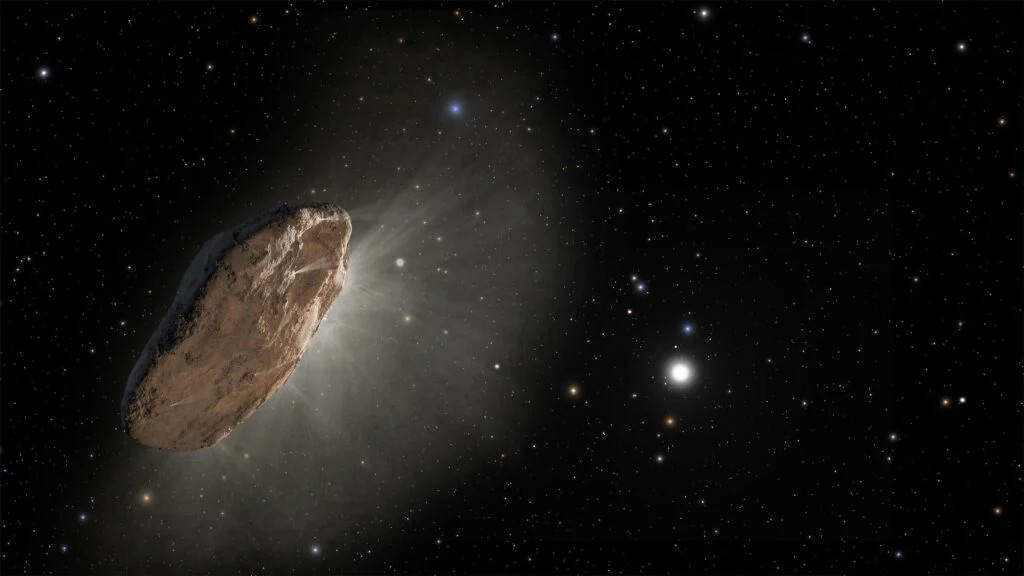
In a move that has left both skeptics and enthusiasts of unidentified aerial phenomena scratching their heads, the US government has decided to appoint Harvard astrophysicist Avi Loeb to chair a new scientific advisory council dedicated to exploring what most of us still casually refer to as UFOs. This appointment is not just any old bureaucratic shuffle; it’s a high-profile gamble by the administration to blend the mystique of alien intrigue with the stifling, paper-pushing world of government oversight. Loeb, who gained fame—and notoriety—for suggesting that the interstellar object ʻOumuamua might be alien technology, is now at the helm of an effort to bring some scientific rigor to the wild, wild west of UFO sightings.
The council, rather than being some cosmic think tank with a mission to prove we’re not alone in the universe, is intended to improve evidence collection around unidentified anomalous phenomena, which translates to: let's not jump to conclusions about little green men just yet, folks. The council will focus on separating the wheat from the chaff, or in governmental terms, distinguishing between balloons, drones, and possibly extraterrestrial visitors. In a twist of irony, the council is tasked with shedding light on the unknown, all while operating under the strict confines of government transparency—an oxymoron if there ever was one.
Still Beats Watergate:
Sponsor success. Continue reading:
Loeb’s previous work has made him a lightning rod for criticism, and now he’s expected to navigate the murky waters of national security while simultaneously feeding the public’s appetite for all things alien. Critics are already lining up to question whether someone whose career has been built on speculation about alien life is truly the right person to bring credibility to this council. After all, it’s hard to be taken seriously when your academic pedigree is intertwined with the pursuit of extraterrestrial life.
The council is expected to produce recommendations based on unclassified information, which is another way of saying it will be operating under the same constraints as a toddler with a crayon: limited but determined. This means that while they may not have access to the juicy top-secret files, they can still analyze the data that’s available—assuming, of course, that they can sift through the mountains of reports written in bureaucratic gibberish that could make any evidence look mundane.
Moreover, the council’s varied membership, which includes experts from fields as diverse as oceanography and data science, might just provide the necessary mix of skepticism and open-mindedness—or it could result in the world’s most expensive game of telephone. The key will be whether this eclectic group can transform anecdotal evidence into actionable insights without spiraling into a free-for-all of wild assumptions and conjecture.
Ultimately, Loeb’s appointment is a double-edged sword. On one hand, it ensures that the search for extraterrestrial evidence remains in the public eye; on the other, it risks devolving into a circus of speculation that could lead to more confusion than clarity. As the new council embarks on its mission, we can only hope they strike the right balance between scientific inquiry and the tantalizing allure of the unknown. Because if there’s one thing we’ve learned from years of government investigations into UFOs, it’s that sometimes the truth is out there—but it’s often buried under layers of bureaucracy, red tape, and a healthy dose of skepticism.