Global Air and Space Chiefs Gather to Discuss Unity While Practicing Division
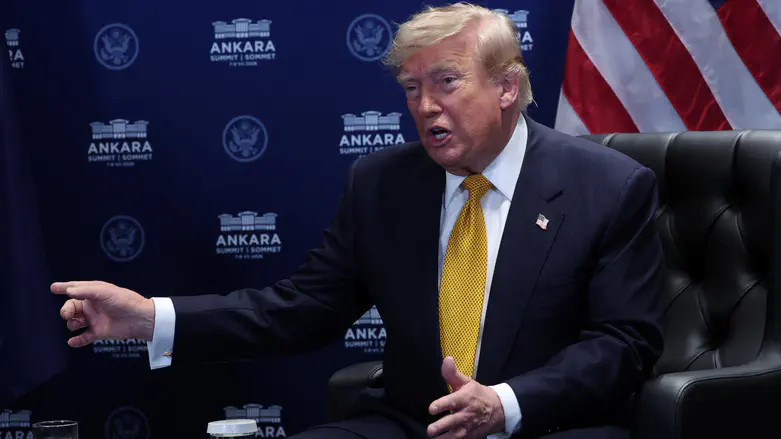
In a bold move reminiscent of organizing a group therapy session for cats, military leaders from the United States, United Kingdom, and a staggering 50 other nations are gathering in London this week to engage in a high-stakes debate about unity in the air and space sectors. This comes on the heels of a particularly prickly NATO summit where President Trump managed to both alienate allies and insist there was unity, all while simultaneously arguing over who gets to keep Greenland.
The theme of this international gathering? A riveting exploration of three key capability areas: space, nuclear, and integrated air and missile defense. Experts predict that this will be a groundbreaking moment in military history, as leaders share their most effective strategies for simultaneously reinforcing their defenses while undermining trust among allies.
Still Beats Watergate:
Sponsor success. Continue reading:
General Kenneth Wilsbach, U.S. Air Force chief of staff, and General Chance Saltzman, head of the U.S. Space Force, are set to deliver keynote addresses that will undoubtedly include the phrase, "cooperation is key," while deftly sidestepping any mention of the actual divisions festering within NATO. The U.K. military plans to unveil their groundbreaking F-35 fleet enhancements, which will be nuclear-capable—because nothing says unity like a few more warheads in the mix.
In a statement reflecting the surreal comedy of the situation, U.K. Air Chief Marshal Sir Harv Smith proclaimed, "This is the ultimate team game; we cannot do this alone," right before realizing that he and his allies have been doing precisely that for years. In a world where the U.K. has unveiled a new defense strategy worth a jaw-dropping $298 billion, it’s clear they are investing in their own capabilities, even as they call for greater unity among the nations.
The irony isn’t lost on those in attendance, as this gathering aims to bolster solidarity while the U.S. and U.K. military relationships appear to be fraying at the seams. Observers are speculating that the U.K.'s push for autonomous drone capabilities hints at a desire to rely less on the U.S. and more on their own homegrown solutions, because nothing conveys partnership like a good old-fashioned arms race.
As military leaders huddle to discuss strategies, one can only imagine them sharing their best practices for avoiding conflict while simultaneously sharpening their knives. After all, if there's one thing these air and space chiefs excel at, it’s the art of diplomacy—where every handshake is a prelude to a potential backstab, and every photo-op is a chance to showcase their latest collection of military hardware.
So as the world watches, let’s raise a toast to the Global Air and Space Chiefs’ Conference—a masterclass in showcasing unity while bickering like children over who gets the bigger slice of the defense budget. In the end, perhaps the only true defense strategy will be the ability to smile broadly while utterly failing to address the elephant in the room: a global landscape more divided than ever.
Indeed, it seems the air and space leaders are ready to dominate the skies—if only they can agree on who gets to control the air traffic. Until then, stay tuned for the next thrilling episode of International Relations: The Series, where every episode ends with a cliffhanger and a promise of more drama to come.