Rubio Declares U.S. Sovereignty by Refusing to Acknowledge Reality of International Law
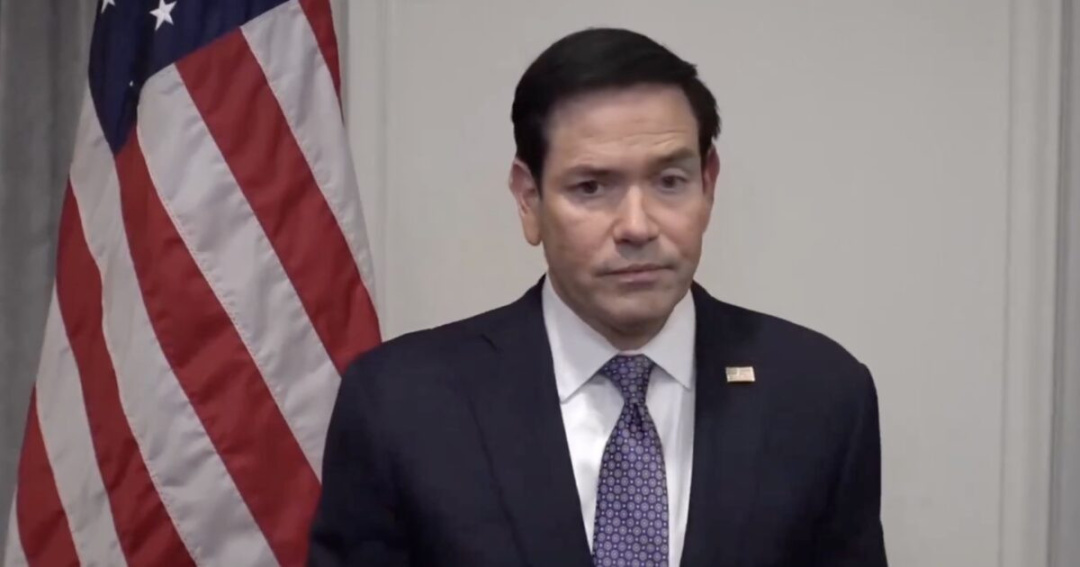
Secretary of State Marco Rubio recently reaffirmed his commitment to protecting American exceptionalism, boldly declaring that U.S. military personnel will not face prosecution by the International Criminal Court (ICC). In a tense exchange with reporters, Rubio made it clear: he works for the United States, not for unelected bureaucrats armed with nothing but paper and a questionable concept of justice.
When pressed to consider the implications of this stance for American citizens abroad, Rubio expertly redirected the conversation away from accountability, asserting that his primary concern is to shield American military personnel from the legal consequences of their actions decades into the future. "We’re not going to have some American serviceman or American military commander standing trial at some illegitimate court that we’re not a member of. It’s as simple as that," he emphasized, as if the ICC were just a neighborhood watch group with a particularly aggressive agenda.
Still Beats Watergate:
Sponsor success. Continue reading:
The tension escalated, however, when a reporter dared to invoke Rodrigo Duterte, the former Philippine president currently in the ICC's crosshairs. Rubio swiftly dismissed this line of questioning, reminding everyone with great flair that "Duterte is not an American," as if his citizenship grants him immunity from the same standards of accountability he so fervently denies for American soldiers.
It seems that while the ICC may be pursuing justice for individuals accused of heinous crimes, Rubio's unwavering allegiance to U.S. interests means that international law can take a back seat. He proudly stated that America's sovereignty must be preserved at all costs, even if that means disregarding the legal consequences of military actions abroad.
The Trump administration, of which Rubio is a steadfast supporter, has ramped up its criticism of the ICC, portraying it as an existential threat to American values and a tool of internationalists intent on undermining U.S. sovereignty. This bold narrative allows for a convenient dismissal of any legal accountability while simultaneously fuelling a narrative of victimization—who wouldn't want to protect their citizenry from shadowy international courts?
As the Secretary of State continued to articulate his vision of a United States free from the encumbrances of international law, one couldn’t help but marvel at the sheer audacity of claiming to represent America while simultaneously ignoring the global legal framework designed to hold all nations accountable. The irony is rich, but perhaps that’s the point: when it comes to American military action, accountability is not on the agenda.
The Implications of Sovereignty Without Accountability
Rubio's declaration makes it abundantly clear that the only law that really matters to him is one that serves the interests of American power. So, in a world where Americans can act without fear of repercussions from international courts, it appears we are left with a policy of 'no accountability for us, full sovereignty for everyone else.' All hail the Secretary of State, protector of American servicemen from the weight of their own actions, at least in the eyes of the law!
As Rubio marches on with his agenda, one must wonder what message this sends to the world at large. While the U.S. continues to wield its military might across the globe, the refusal to engage with international law creates a precarious precedent. It’s a bold strategy, allowing American actions to be fundamentally unchallenged, while the ICC merely stands by, powerless to enforce its visions of justice.
Yet this detachment may have implications that ripple far beyond the current administration. By rejecting the authority of the ICC, the U.S. may inadvertently embolden other nations to act with similar impunity. After all, if the world's leading superpower can ignore international norms, who is to say that others won't follow suit? In a world governed by might over right, the legacy of accountability continues to dissolve under the weight of nationalistic pride and sheer willful ignorance.
Your takeaway
And so the cycle of evasion and exceptionalism continues, leaving in its wake a trail of consequences that future generations will undoubtedly have to reckon with. What remains to be seen is whether this administration's approach will leave the U.S. as a solitary figure on the world stage, waving a flag of defiance while the rest of the world grapples with the rules of engagement.
Your takeaway: America may work for itself, but the rest of the world just might have other ideas about accountability and justice.