Trump Claims Midterm Losses Were Just a Test of His Enduring Popularity
This past Tuesday, President Donald Trump's Republican Party did something unprecedented: they lost the House, the Senate, and even statewide offices in red states that hadn't seen a Democratic victory in decades. Typically, a defeat of this magnitude would send a politician into a spiral of self-doubt, but not our Donald! Instead, he emerged from his gilded cave in a surprisingly reflective mood—one where he grapples with the notion that perhaps, just maybe, he wasn't the reason for the losses. Why bother wrestling with accountability when you can float the theory of a parallel universe where voters failed to materialize on Election Day?
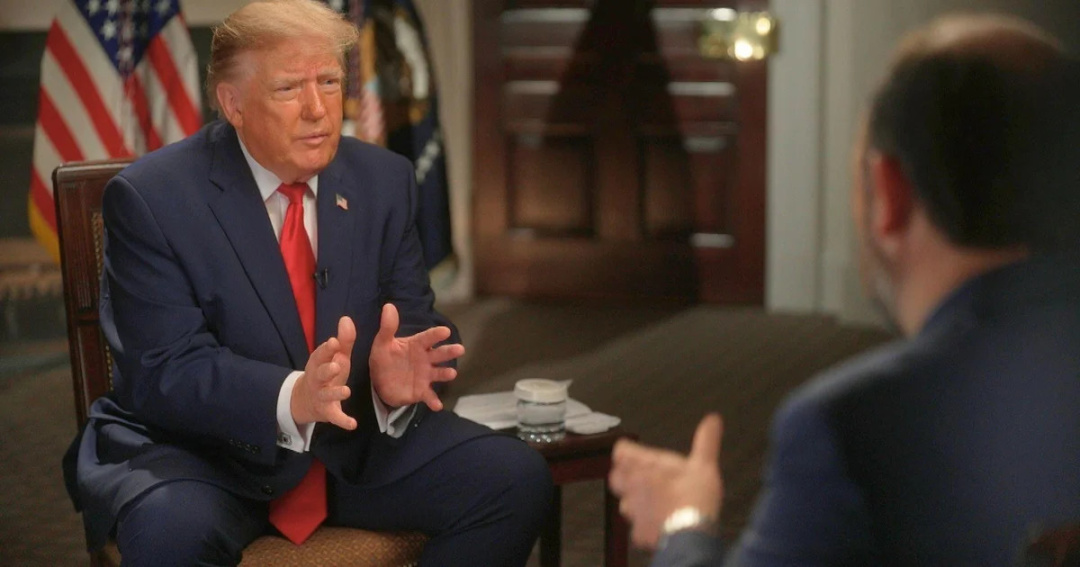
During a sit-down with CBS, Trump analyzed the midterms with the finesse of a toddler trying to figure out why their candy bar is missing. "Well, number one, I was not on the ballot," he proclaimed, as if the voters had collectively decided to ignore the giant elephant—or shall we say, the giant former-president—looming over the election. Instead of taking a hard look at why some candidates he endorsed lost, he preferred to blame a mysterious malaise afflicting the electorate, because if history has taught us anything, it’s that voters simply love a good mystery.
Still Beats Watergate:
Sponsor success. Continue reading:
Ross Douthat, his interviewer, attempted to peel back the layers of this political onion, asking, "Why can't it transfer?" Trump's answer was as enlightening as watching paint dry: "They didn't like the candidates." You know, the ones he handpicked. But he soldiered on, equating his popularity to a kind of magic that should have transcended the ballot box. If only voters had a magical ability to teleport their affection for him into votes for candidates they couldn’t even pick out of a lineup!
As the conversation drifted to more serious topics—like Iran and immigration—Trump stumbled into a self-contradiction so rich it could be bottled and sold as a fine wine. His insistence on being a dealmaker, while simultaneously endorsing the very deportation policies that might alienate potential allies, paints a vivid picture of someone trying to negotiate peace while simultaneously throwing firecrackers into the negotiating room. Imagine trying to mediate a peace treaty while loudly proclaiming, "I’m only here for the fireworks!"
Trump's Media Blame Game Unraveled
Now, let’s not forget Trump’s brilliant observation about the media. He claims his administration had historically good numbers during his tenure, but of course, it’s the media’s fault that no one feels it. Clearly, if only the press would stop reporting on dismal economic indicators, Americans would be ringing church bells in celebration of the Stock Market’s performance—never mind the empty pockets at home.
The Absurdity of Political Accountability
In a surprising twist towards the end of this farcical inquiry, Trump announced potential changes to his cabinet, hinting at the kind of reshuffling that suggests more than just a simple game of musical chairs. Perhaps, he thinks, the answer to his party’s woes lies in a fresh coat of paint on the walls of the White House—or better yet, a new cast of characters to play out the same tired plotlines.
In closing, it seems that Trump’s post-midterm analysis is not just a reflection on electoral strategy but a masterclass in how to maintain a veneer of popularity despite the overwhelming tide of public opinion. If voters wanted a show, they certainly got one! But as the curtain falls, the real question remains: when will they understand that the greatest performance is not on stage but in the ballot box? The saga continues, and one can only wonder what other astonishingly non-self-reflective turns are in store for this ongoing melodrama.