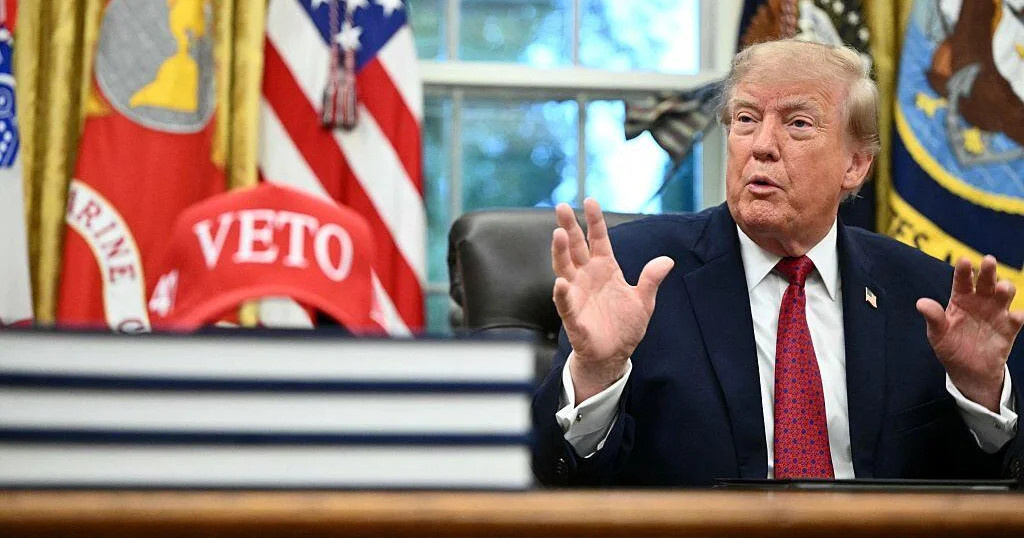
Democrats Capture Congress, Prompting Trump to Blame His Invisible Ballot
In the latest chapter of America’s political circus, Democrats have emerged victorious, seizing full control of Congress, much to the chagrin of a bewildered Donald Trump. As the results rolled in, one thing became clear: voters were not just rejecting Trump’s Republican Party but were also indicating they had, in fact, been told to envision him on their ballots.
"Pretend I'm on the ballot!" Trump exclaimed to his supporters, clearly missing the memo that voters actually did imagine a world in which he was, and it apparently included a resounding rejection of his agenda. The Democrats flipped five Republican-held seats in states known for their deep, crimson roots, a feat that would have previously seemed like asking a cat to fetch.
Still Beats Watergate:
Sponsor success. Continue reading:
What’s more alarming for the former president is that a staggering 43% of those who participated in the midterms cited their votes as a protest against him. The irony here is thicker than the layers of bureaucracy in a government office. Voters expressed that the Trump administration had not adequately addressed issues like affordability and corruption, which Trump had previously branded as mere distractions.
In the shadow of yet another electoral setback, Trump dismissed the defeat with a classic twist of logic, tweeting, "I wasn’t on the ballot and if I was, we would have won IN A LANDSLIDE!" This statement has spurred the creation of a new political theory: the invisible candidate. Imagine the power Democrats could wield if they simply claimed they were never on the ballot to escape defeat in future elections!
Meanwhile, Chuck Schumer and the Democrats are preparing to wield their newly acquired oversight powers like a toddler with a shiny new toy: with reckless abandon. They’ve promised to investigate everything from Trump’s dubious business dealings to his questionable renovations at the White House — because if you can’t win an election, you might as well win the investigative war.
The Shifting Dynamics of Future Elections
Amidst all this chaos, the landscape for future elections is changing dramatically. With Trump’s approval rating lower than that of any president at a similar point in their term for two decades, the Republican Party faces an existential crisis. The upcoming battles for the 2028 presidential nomination are likely to resemble a game of musical chairs — only, this time, the music is playing for those who manage to distance themselves from Trump’s increasingly controversial legacy.
As Democrats prepare to turn their electoral victories into legislative power, the next two years promise a political showdown of epic proportions. With investigations looming and a mandate to act against perceived corruption, the stage is set for the kind of clashes that might make even the most seasoned Washington insiders cringe.
Your takeaway
Just as voters are learning to pretend Trump is on the ballot, the Democrats are gearing up to reboot the oversight process as if it’s some kind of political reality show where everyone gets voted off the island — or in this case, out of the Oval Office's grasp. The upcoming congressional session will surely provide a fascinating spectacle of political maneuvering as both sides scramble to take control of the narrative, the investigations, and perhaps most importantly, the very soul of American governance.
In the end, the political landscape has shifted, and if this election has proven anything, it’s that voters have a funny way of making their voices heard — even when they’re just pretending to vote for a ghost.